







MVR Evaporator Installation Timeline: What to Expect
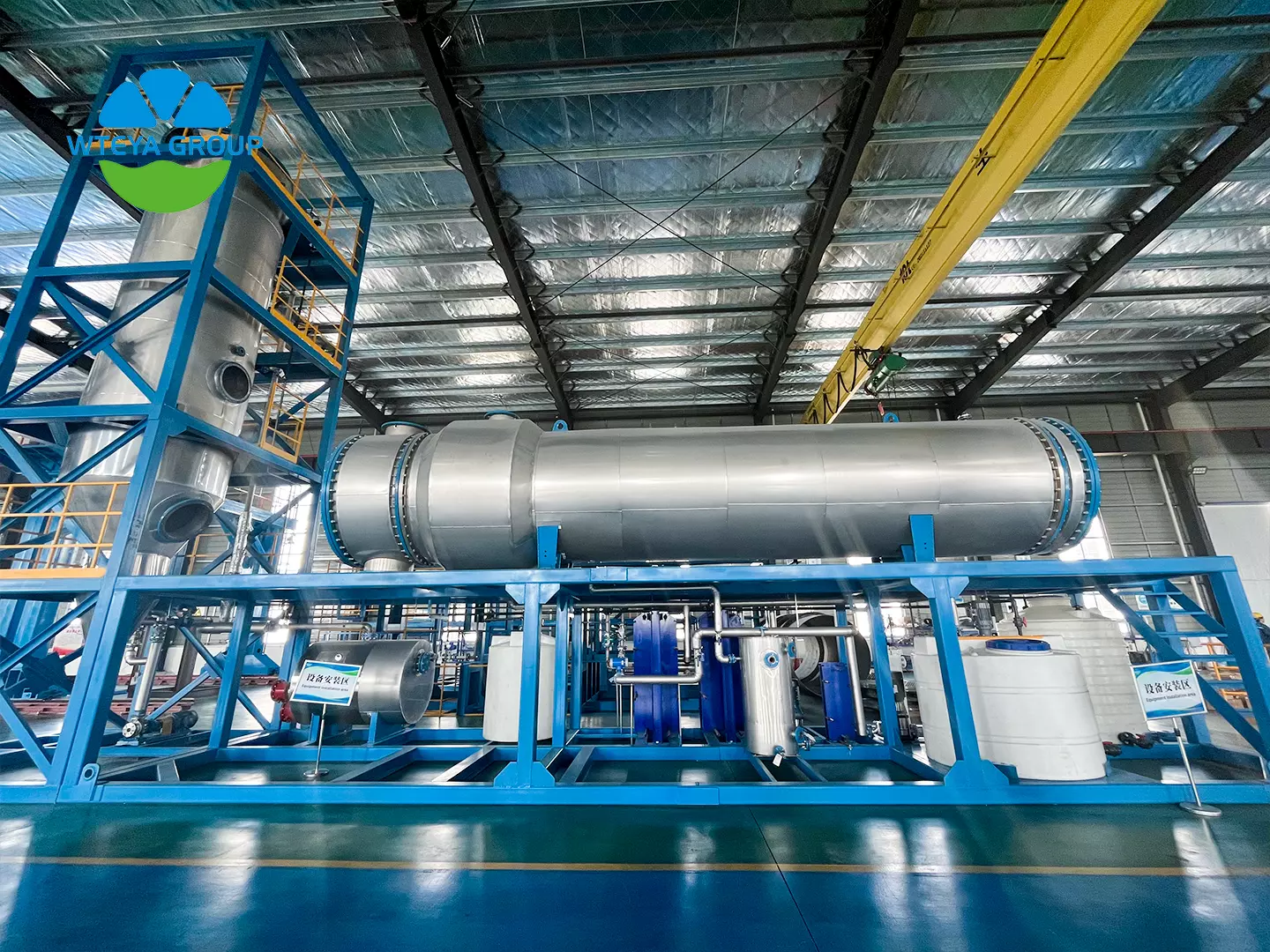
The purchase order is only the beginning of the story. Once an MVR evaporator arrives on site, the weeks that follow decide how soon the plant is turning wastewater into distilled water — and how much of that time is spent productively rather than waiting on civil works. For most projects the on-site installation and commissioning period runs from two to six weeks, though a large turnkey system can stretch that to five to eight weeks. Understanding what drives the schedule is what lets a client plan the hand-over date with confidence.
The notes below set out the typical phases, the numbers behind them, and the three factors that most often push a project past its target.
⏱️ How Long Installation Normally Takes
The duration is driven mostly by equipment size and scope. Three broad bands cover almost every project:
- Compact skid units (up to 5 t/h) — assembled and tested at the factory, then lifted into place as modules. Lifting, piping-up, wiring and commissioning are usually done in two to three weeks.
- Medium systems (10 to 30 t/h) — on-site installation typically takes three to four weeks.
- Large turnkey projects (above 30 t/h, or including a crystallizer and pretreatment) — five to eight weeks or more, because more disciplines and more tie-ins are involved.
A skid-mounted MVR evaporator system gains most of its speed from factory assembly: the fewer connections left for the site, the shorter the critical path.
🔧 What the Installation Covers
A typical sequence, with the time each stage usually needs, looks like this:
- Foundation acceptance and equipment positioning — 1 to 3 days.
- Process piping — feed, discharge, condensate, steam and vent lines — 3 to 7 days.
- Electrical and instrument wiring — cable laying, PLC cabinet installation and instrument calibration — 3 to 5 days.
- Vacuum system and compressor alignment — 2 to 3 days.
- Individual equipment test runs — pumps, vacuum pump and compressor, one by one — 2 to 3 days.
- Integrated test run and performance acceptance — typically a continuous 72-hour performance test — 3 to 7 days.
If an existing building is being reused rather than a new one constructed, add the time needed to strip out old equipment, reinforce foundations and adjust headroom. Those hidden items are frequently the reason a schedule slips.
⚠️ The Three Factors That Delay a Project
Almost every late commissioning traces back to one of three causes, and all three can be managed before the equipment ships:
- Civil foundation readiness. Equipment waiting for its foundation is the most common source of idle time. Confirm the foundation drawings during the design stage, and have the concrete cured before the delivery date.
- Utilities in place. Water, electricity, steam and compressed air must all be available at the tie-in points. A plant cannot be commissioned on a temporary supply.
- Site access for lifting. Confirm that cranes and delivery vehicles can reach the installation point before the modules arrive.
For a system that includes a crystallizer or a pretreatment train, the interfaces between packages deserve extra attention — they are where sequence assumptions are most likely to be wrong.
📋 How to Compress the Schedule
Three practical measures shorten the on-site period without cutting corners. First, fix the total installation and commissioning duration, plus the milestone dates, in the contract so both sides plan to the same calendar. Second, require the supplier to send a professional installation team and commissioning engineers to stay on site rather than advising remotely. Third, have the client’s own operators shadow the commissioning so that, once acceptance is passed, they can take over operation without a gap.
🏆 Why Plan Installation With WTEYA
WTEYA designs and builds MVR evaporator plants in modular form wherever possible, so that factory assembly replaces site labour. Our scope covers process design, equipment manufacture, on-site installation, commissioning and performance testing, with a resident team on hand through the 72-hour acceptance run. With nearly two decades of experience and more than 2,000 customers, we plan the installation timeline as part of the proposal — not as an afterthought — so the plant is handed over on the agreed date and the client’s operators are ready to run it.
🔗 Related FAQs
What Is the Delivery Time for an MVR Evaporator?
Which Factors Drive MVR Evaporator Investment Cost?
MVR Evaporator Maintenance: A Practical Service Checklist
How Long Does an MVR Evaporator Last?
What Should You Verify Before Choosing an MVR Evaporator Manufacturer
Schedule a video call with our engineers to explore your options.
📲 WhatsApp: +86-1800 2840 855
📧 Email: info@wteya.com
🌐 Website: www.wteya.com
Previous: Can MVR Evaporator Condensate Water Be Reused?
Next: No More