







Can MVR Evaporator Condensate Water Be Reused?
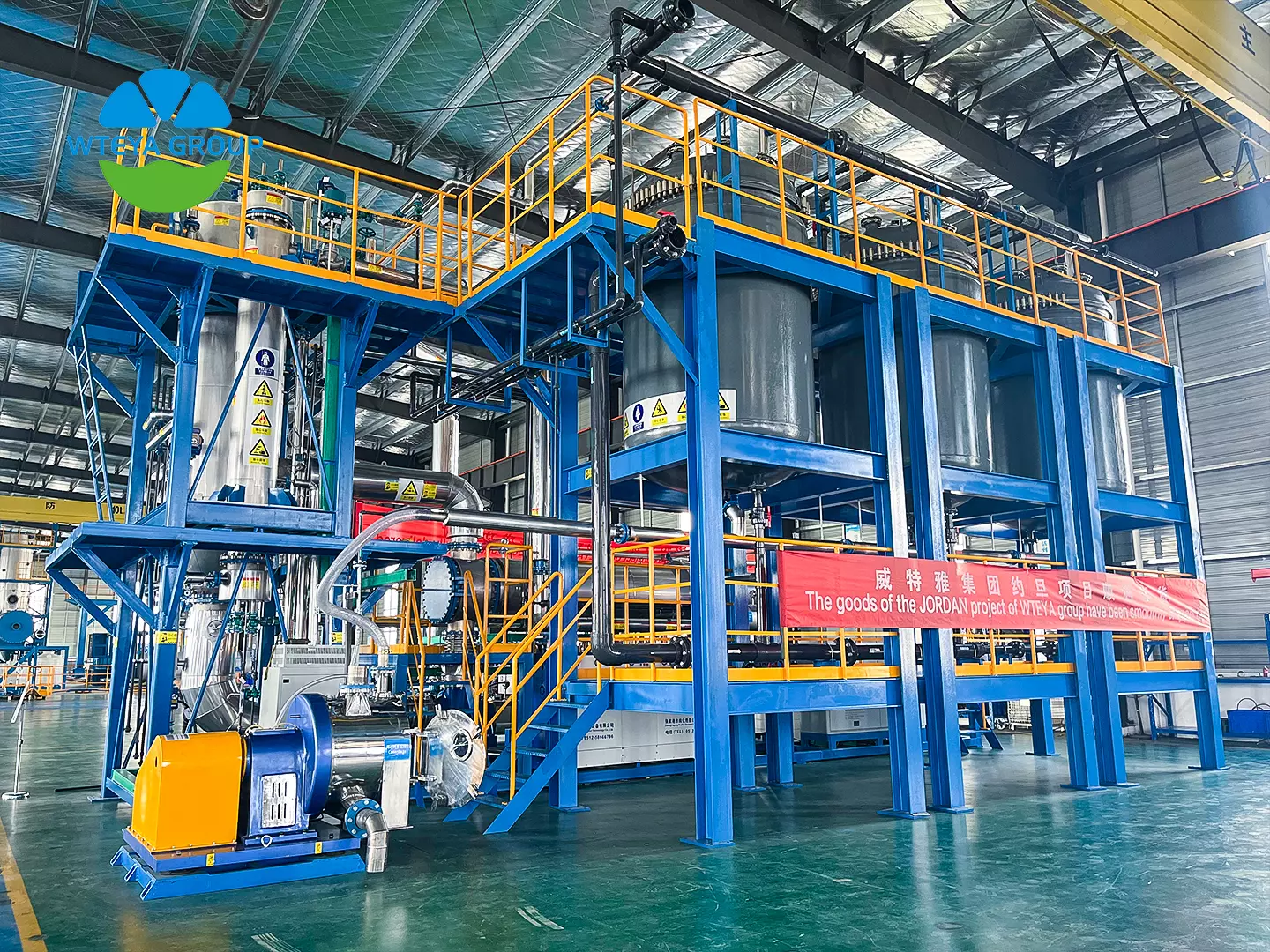
An MVR evaporator does more than concentrate a difficult wastewater stream — it also produces a stream of high-purity distillate. The secondary-vapour condensate formed inside the unit typically has a conductivity below 10 µS/cm, close to that of demineralised water, and its volume is roughly equal to the amount of water evaporated. That makes condensate the single largest product stream in a zero liquid discharge plant, and the reason overall water recovery can reach 95% or more. Treating it as a resource rather than a nuisance is where much of the payback comes from.
The notes below describe what makes this condensate usable, where it is normally sent, and what has to be watched to keep it clean.
💧 What Makes MVR Condensate Different
Because it is formed from evaporated vapour rather than from a filtered liquid, condensate carries almost none of the dissolved salts in the feed. Three properties define its value:
Conductivity below 10 µS/cm — effectively pure water, far cleaner than the plant's own raw or softened supply. Extremely low salt content — dissolved solids are left behind in the concentrate, and only trace organics remain. Volume almost equal to the evaporation rate — condensate is not a small sidestream but the main product-water source of the whole system.
🔁 Four Proven Reuse Routes
In practice, condensate from an industrial installation is directed to one of four destinations:
- Process reuse — fed directly into production batching, dilution and cleaning lines.
- Cooling tower makeup — used as circulating-water makeup, reducing the demand for treated fresh water.
- Boiler feedwater — where the specification allows, and after suitable demineralisation, it becomes boiler-grade feed.
- Feed to a membrane system — polished through reverse osmosis to meet the highest purity requirements.
The right route depends on the downstream process. A unit feeding a boiler or an electronics plant will usually justify further polishing, while a site with heavy cooling-tower demand can absorb condensate directly. Our multi-effect evaporator and MVR ranges are configured around whichever destination the client needs.
✅ Keeping Condensate Quality Stable
Stable, low-conductivity condensate is a design outcome, not an accident. The measures that secure it are straightforward but must be built in from the start:
- A high-efficiency demister and a wire-mesh mist eliminator at the top of the separator, to prevent droplet carry-over.
- Sufficient vapour space between the heater and the separator, so entrainment settles before the vapour reaches the condenser.
- Optional ion-exchange or membrane polishing on the condensate line where an even lower conductivity is required.
- A logged conductivity trend in daily operation, so foaming, leakage or carry-over is spotted the moment it appears.
⚠️ When Condensate Deserves a Second Look
Condensate is not automatically safe to reuse everywhere. Foaming and entrainment are the classic sources of contamination: if droplets of concentrated liquor reach the condenser, conductivity climbs and the distillate is no longer process-grade. Liquors with high COD can also carry volatile organics into the condensate, which means the water should be tested before it is returned to production or sent to a boiler. Routine monitoring of conductivity and pH, backed by sampling whenever the feed changes, is the simplest safeguard there is.
📊 The Value of Condensate Reuse
Returning condensate turns the evaporation plant from a disposal cost into part of the water balance. Combined with membrane permeate, condensate reuse is what allows a well-designed system to reach an overall water recovery of 95% or more, shrinking both the volume and the cost of the final discharge. WTEYA evaporation systems include online condensate monitoring as standard, and the reuse scheme — process, cooling, boiler or RO feed — is customised to each client's water quality rather than fixed in advance.
🔗 Related FAQs
Five Ways to Cut MVR Evaporator Operating Costs
MVR Evaporator Maintenance: A Practical Service Checklist
How Much Water Does a Zero Liquid Discharge System Recover?
How Long Does an MVR Evaporator Last?
Schedule a video call with our engineers to explore your options.
📲 WhatsApp: +86-1800 2840 855
📧 Email: info@wteya.com
🌐 Website: www.wteya.com
Previous: MVR Evaporator Warranty: Coverage, Duration and Service Response
Next: No More