







Leachate Treatment: Full-Process Approach for Australia
Leachate treatment for septic and liquid waste companies in Australia has become a process-design question rather than a haulage question. Tightening discharge limits on ammonia and nitrogen, rising tip fees and the cost of moving concentrate by tanker have made the old route — collect, cart, discharge — the most expensive option on the table. A full-process approach, built from pretreatment, evaporation, membrane polishing and residue management, is the configuration that closes the loop on site.
⚙️ Why Leachate From Septic and Liquid Waste Operations Is Difficult
Leachate treatment is not one problem. It is four problems arriving in the same tank: organic load, ammonia, dissolved salt and heavy metals. For septic tank servicing and liquid waste companies in Australia, all four now have to be solved inside a framework that no longer treats dilution or long-distance haulage as a strategy.
The numbers move constantly. A tanker load of domestic septage and a load of industrial grease trap waste can differ by an order of magnitude in COD, and ammonia nitrogen in leachate commonly sits in the high hundreds to low thousands of milligrams per litre. Chloride arrives with the salt from water softeners and trade waste, and heavy metals arrive with whatever industry sent the load. A plant designed for the average load fails on the peak load, and the peak is what regulators and neighbours remember.
That variability is why a full-process leachate treatment line is designed from four connected stages rather than from a single equipment selection.
🧪 Pretreatment Sets the Ceiling for Everything After It
Pretreatment is where a leachate plant is either made workable or made expensive. Screening and grit removal protect downstream pumps; equalisation tanks absorb the batch rhythm of tanker deliveries so that the biology and the evaporator see a steady feed instead of a shock load. Equalisation is the cheapest capacity a liquid waste site will ever buy, and it is the first thing cut from a budget-driven design.
Chemical pretreatment follows: pH correction, coagulation and flocculation, and sedimentation or dissolved air flotation to take out suspended solids, oil and grease. Where ammonia is the binding constraint, stripping under controlled pH removes nitrogen before it reaches the evaporator, since ammonia travels with vapour and can quietly contaminate the condensate.
For sites with a strong organic fraction, a membrane bioreactor ahead of evaporation cuts COD and sludge volume at the same time, and gives the evaporator a feed that fouls far more slowly.
🔥 MVR Evaporation Cuts Volume and Separates Salt
Mechanical vapour recompression takes the vapour boiled off the leachate, compresses it to raise its pressure and temperature, and gives that heat back to the boiling liquid. The compressor does work; the latent heat is recycled instead of thrown away. That is why an MVR evaporator consumes a fraction of the energy of a single-effect thermal unit for the same evaporation duty, and why it fits sites with a limited steam supply.
In a leachate train the evaporator does two jobs at once. It removes water, and it separates the salt burden into a small concentrate stream. Distillate quality is set by the separation stages inside the vessel; volatile organics and ammonia are the two components that will follow the vapour if pretreatment has not dealt with them first.
Design choices matter more here than in clean-water duty. Forced circulation handles crystallising and scaling feeds; duplex or titanium wetted parts handle chloride; cleaning-in-place routines are written around the specific scalant, not around a generic schedule. A leachate evaporator that is specified like a brine concentrator will run, but it will be cleaned far more often than the operator was promised.
💧 Membrane Polishing, Residue and the Full-Process Cost View
Evaporator distillate is clean but rarely clean enough to discharge without a final step. Reverse osmosis or nanofiltration polishes residual salts and organics, and where trace COD persists, advanced oxidation closes the gap. Reject from polishing goes back to the evaporator, so the plant produces treated water and a solid or near-solid residue, not a second liquid waste stream.
This is where cost comparisons usually go wrong. A price per cubic metre of influent flatters whichever option moves the problem elsewhere. The comparable figure is cost per cubic metre of waste actually eliminated, and it has to include haulage avoided, licensed disposal of residue, electricity, chemicals, membrane replacement and labour. Evaporation has a higher capital cost and a lower running cost than haulage, and the crossover point depends on distance, tip fees and the salt load — which is why the calculation should be done with the site’s own data.
A full-process line also changes what a liquid waste company can accept. Once the plant can take high-chloride or high-ammonia loads without tripping, the gate fee becomes a commercial decision rather than a technical gamble. That is usually the point where the investment case stops being about compliance and starts being about capacity.
❓ Frequently Asked Questions
What leachate data is needed before a treatment line can be sized?
COD, BOD, ammonia nitrogen, total dissolved solids, chloride, sulphate, oil and grease, heavy metals and pH, sampled across a seasonal cycle rather than on one day. Flow and delivery pattern matter as much as concentration, because tanker receipt is a batch operation and equalisation volume follows from it.
Can MVR evaporation handle high chloride and ammonia?
It can, provided the materials and the pretreatment are chosen for it. Chloride drives the wetted-part selection and the cleaning regime; ammonia has to be controlled by pH and, where limits are tight, removed by stripping before evaporation, because it will otherwise carry over into the distillate.
Is full-process treatment cheaper than hauling leachate off site?
It depends on haulage distance, tip fees and salt load, and the answer changes with site size. Evaporation usually carries the higher capital cost and the lower running cost; the comparison that matters is cost per cubic metre of waste eliminated over a full year, including residue disposal.
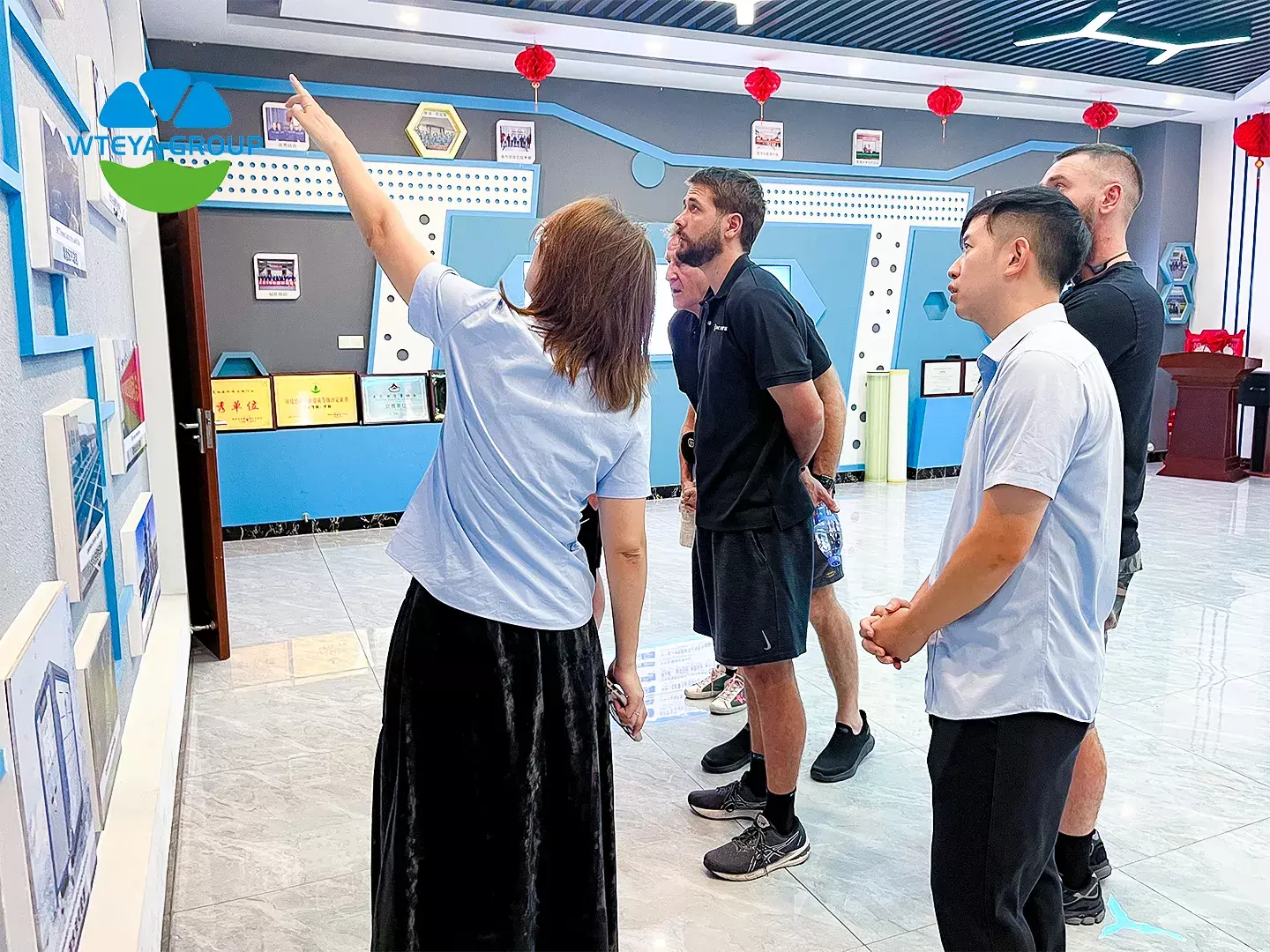
Schedule a video call with our engineers to review your leachate analysis and site layout. WTEYA builds pretreatment, evaporation and membrane systems as one integrated line, with customized design and full OEM & ODM support.
📲 WhatsApp: +86-1800 2840 855
📧 Email: info@wteya.com
🌐 Website: www.wteya.com
Previous: Salt Recovery from Wastewater by Evaporation Crystallization
Next: No More