







Can Small Desalination Plants Be Used on Islands?
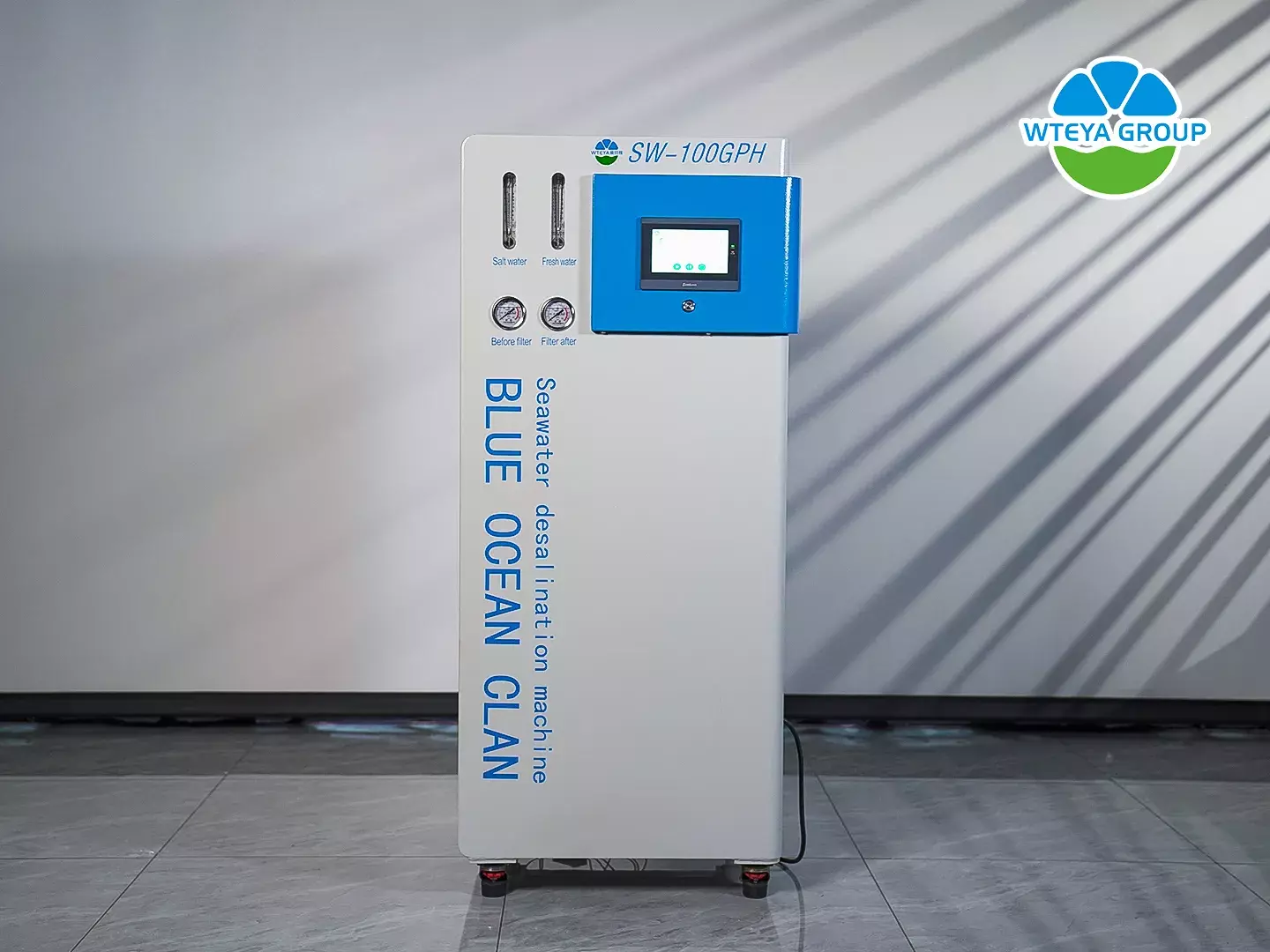
Yes. A small desalination plant is in fact the option most often chosen for small islands and off-grid locations where there is no municipal water network and fresh water has to be shipped in. A properly sized system built around seawater desalination technology produces 10 to 20 tons of fresh water per day, enough for several hundred residents, and it runs on a standard single-phase power supply.
This article explains why islands are different, how the plant works, how much water it delivers, what the site needs, and what to check before ordering.
🏝️ Why Island Water Supply Is a Different Problem
An island is not simply a small version of a coastal town. Three constraints shape every design decision:
• Distance from the mainland — every cubic meter delivered by boat carries a freight cost and is exposed to weather delays, so supply can stop exactly when demand peaks.
• Brackish wells — island groundwater is usually in hydraulic contact with the sea, so its salinity is often too high for direct drinking without treatment.
• Seasonal rainfall — rainwater harvesting is a useful supplement but cannot be the base supply, because dry seasons coincide with the tourist and irrigation peaks.
Producing water on the island removes the transport dependency entirely: the raw material is the sea in front of the plant.
⚙️ How a Small Island Desalination Plant Works
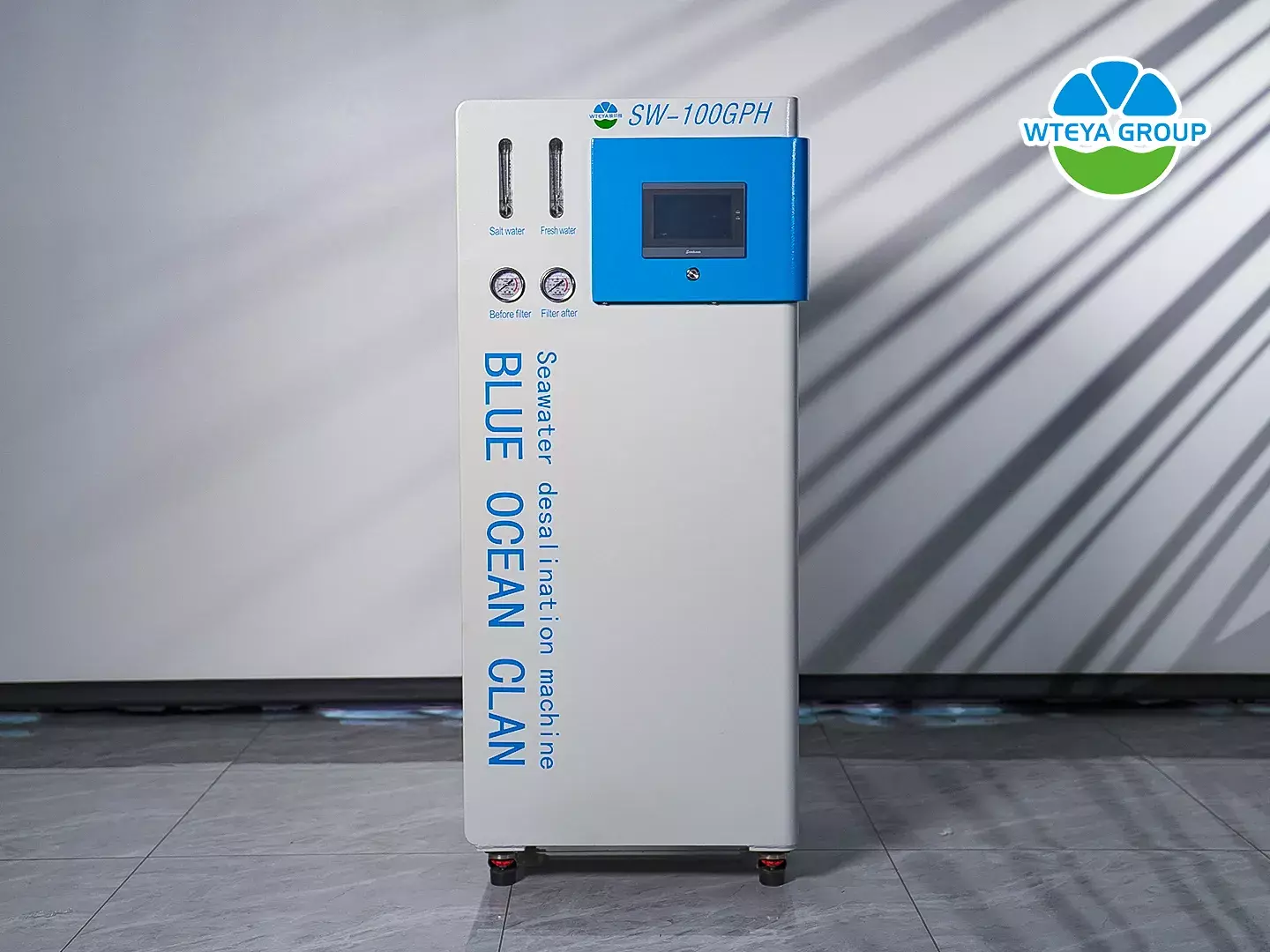
The process is short and well proven:
1. Intake. Seawater is drawn through a screened intake placed away from sewage outfalls and sediment accumulation zones.
2. Multimedia pretreatment. Suspended solids, sand and algae are removed to protect the membranes.
3. Reverse osmosis. RO membranes reject the salt; a 4040 seawater membrane (4 inch × 40 inch, about Ø100 × 1016 mm) removes more than 99% of dissolved salts.
4. Energy recovery. The pressure energy in the brine is recovered, bringing specific energy consumption down to 3–4 kWh per cubic meter (5–7 kWh/m³ without a recovery device).
5. Storage and level control. Product water enters the fresh water tank; float switches stop the unit when the tank is full and when the seawater tank runs low, so the pump never runs dry.
📊 Capacity: 10–20 Tons per Day and Who It Serves
Output is set by the number of membranes in parallel, not by a single fixed model:
• Single 4040 membrane: 2,000–2,500 GPD, i.e. roughly 7–9 t/day.
• Multi-membrane skid: 10–20 t/day of product water.
At a consumption of 50–100 liters per person per day, the population served looks like this:
10 t/day → about 100–200 people · 15 t/day → 150–300 people · 20 t/day → 200–400 people.
Real output moves with conditions: warm seawater pushes it toward the upper figure, cold seawater reduces it, and a fouled membrane reduces it further until cleaning is carried out.
🔌 Power, Space and Installation Requirements
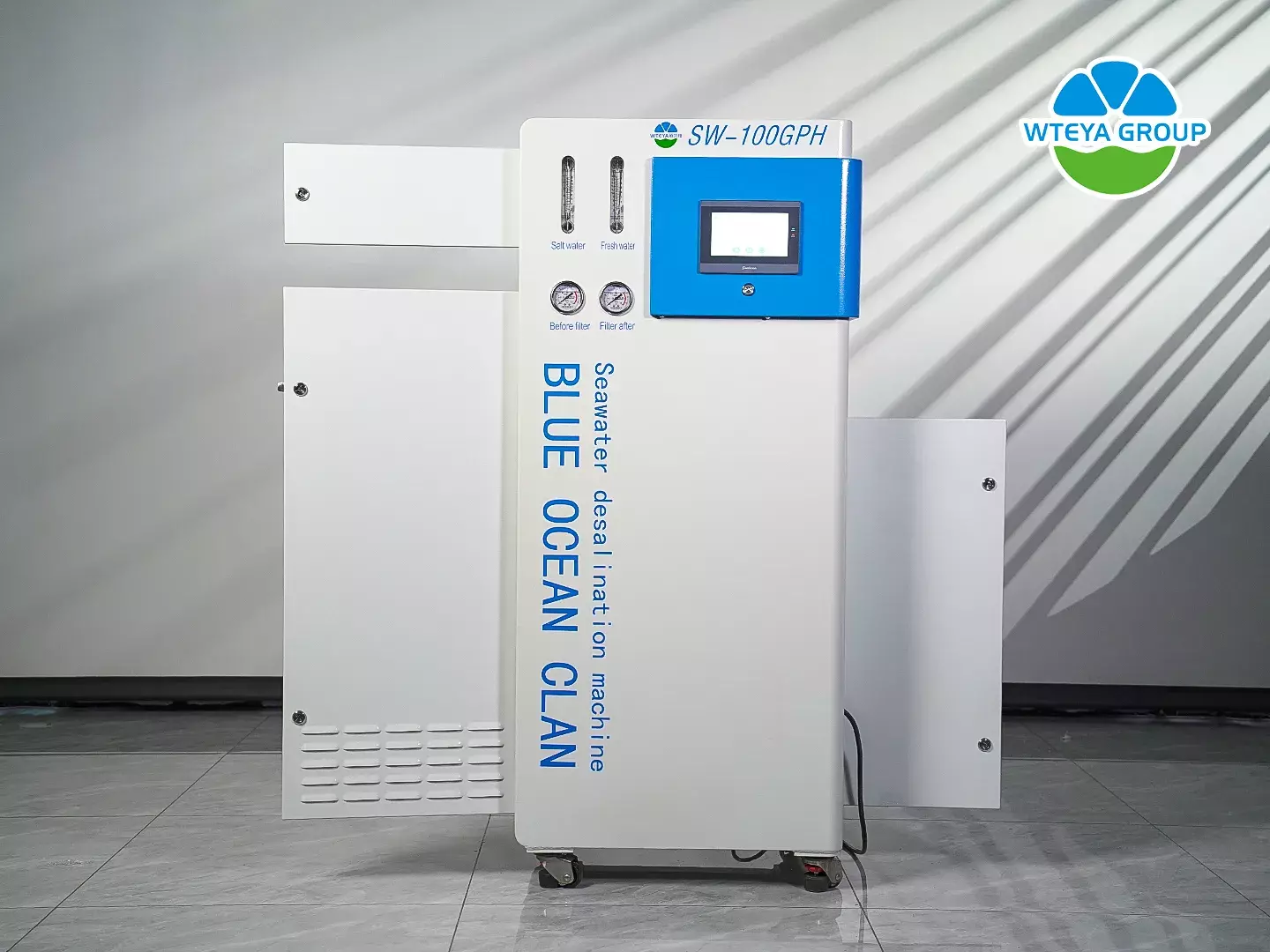
These are the site conditions that most often cause delays, so they are worth confirming before the unit ships:
• Power: standard supply is AC220V single-phase 50 Hz, input current ≥16 A, voltage range AC200–240 V. A 60 Hz island grid requires a customized build (≥25 A, direct breaker connection). Three-phase power must never be connected — it destroys the electrical system and is outside the warranty.
• Generator operation: a generator is acceptable, but its rating has to cover the high-pressure pump start-up current.
• Seawater tank: customer-supplied, 500 L or larger is recommended for a stable feed.
• Piping: PE, PPH or 316L stainless steel, PN10. Equipment inlet is 6/8 inch female thread (G3/4"); product and brine outlets are G1/2".
• Consumables: citric acid and sodium hydroxide for membrane cleaning, antiscalant, and gear oil CKD220 or GL-5 SAE 85W-90 for the plunger pump.
Footprint is modest — a 10–20 t/day skid fits a small technical room or a 20-foot container, which matters where land on the island is scarce.
💡 Key Advantages Over Water Delivery and Rainwater
Compared with shipping water, the plant removes the weather risk and the recurring freight bill; compared with rainwater, it delivers a predictable daily volume independent of the season. Water quality is also stable: outlet TDS is typically held below 500 mg/L, with turbidity and microbiological indicators meeting drinking water requirements after disinfection.
Deployment is flexible as well. Skid-mounted units can be moved between sites, and a containerized mobile treatment plant can be relocated if the island development plan changes.
⚠️ What to Plan Before Installation
Three items decide whether the plant stays reliable: a seawater intake that is clear of sewage and silt, a maintenance routine built around membrane cleaning with citric acid and sodium hydroxide plus continuous antiscalant dosing, and a trained local operator who can read pressure, flow and conductivity trends. Spare membranes, cartridge filters and cleaning chemicals should be kept on the island, because a delayed shipment is exactly the problem the plant was bought to solve.
❓ Frequently Asked Questions
How much water does a small island desalination plant produce?
10–20 t/day with multiple 4040 membranes in parallel; a single membrane gives 7–9 t/day.
Can it run on the island's single-phase supply?
Yes, AC220V single-phase 50 Hz at ≥16 A. A 60 Hz grid needs a customized unit. Three-phase power is prohibited.
Does the island need a large water tank?
A seawater feed tank of 500 L or more is recommended; the fresh water tank is sized to the daily demand and the unit stops automatically when it is full.
Schedule a video call with our engineers to explore your options.
📲 WhatsApp: +86-1800 2840 855
📧 Email: info@wteya.com
🌐 Website: www.wteya.com

Previous: Can a Desalination Plant Treat Brackish Water?
Next: No More