







MVR Evaporator Compressor: Centrifugal vs Roots Blower
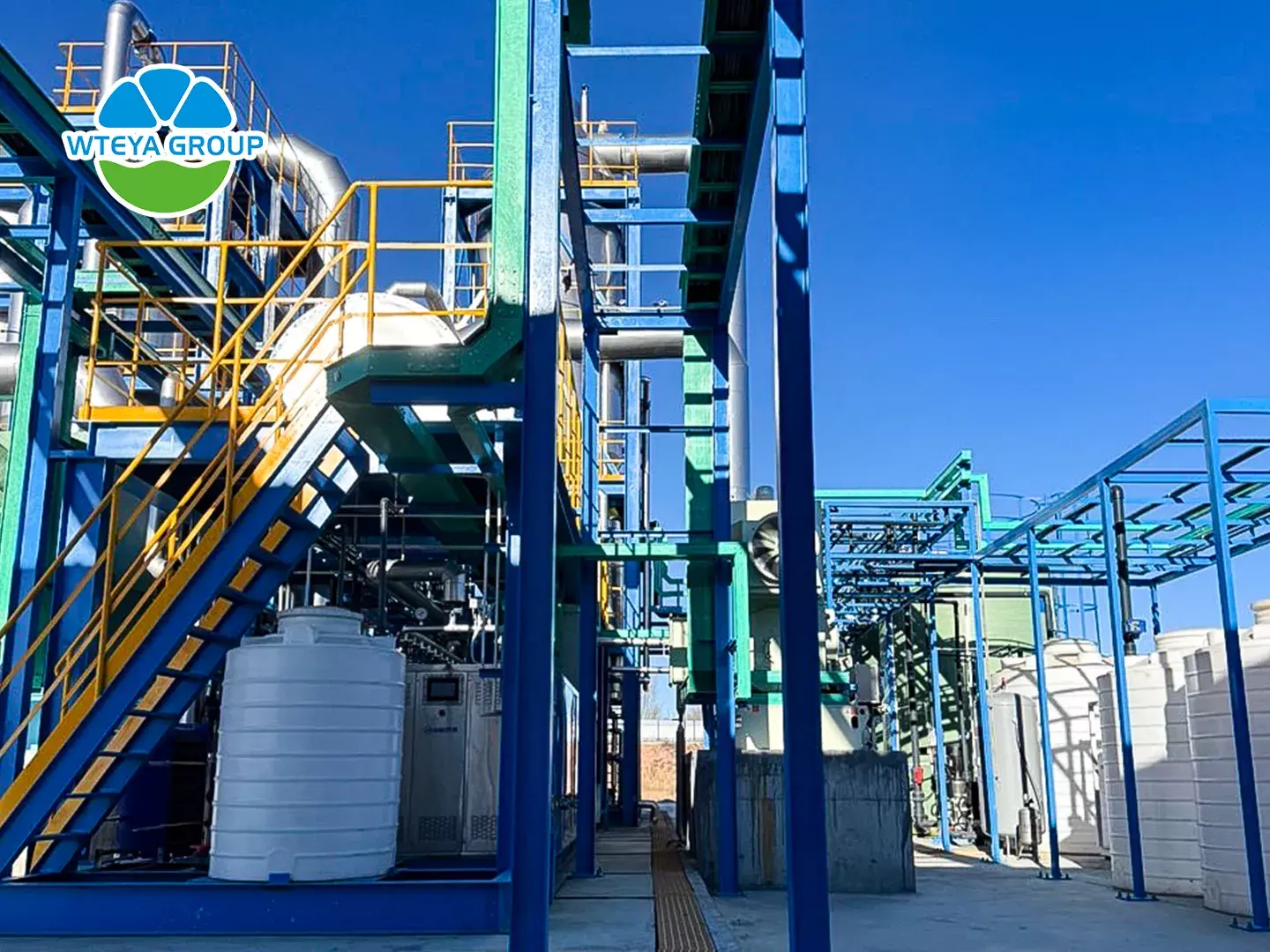
In an MVR evaporator, the compressor is the only component that pays for the separation. It lifts the secondary vapour from evaporator pressure to heating-shell pressure, and every 1% of compressor efficiency you lose is paid back as electricity on every tonne of water you evaporate. The choice between a roots blower and a centrifugal compressor is therefore not a purchasing preference — it fixes the achievable temperature difference, the specific power consumption and the turndown of the whole system.
This guide sets out how the two machine types actually differ in service, where each one stops being economic, and which data you must fix before asking for a quotation.
⚙️ Why the Compressor Sets the Limits of the Whole System
The compressor has to deliver a pressure ratio high enough to overcome three things at once: the saturation pressure difference created by the required temperature difference across the heating surface, the boiling point elevation of the solution, and the pressure losses through the mist eliminator, piping and preheaters. In practice a designer starts from the temperature difference, converts it to a pressure ratio with steam tables, and then checks whether the resulting machine exists at the required volumetric flow.
Typical MVR systems run with a heating-shell to evaporator temperature difference of 4 to 12 °C, which corresponds to a pressure ratio of roughly 1.25 to 2.2 for water vapour in the 60–100 °C range. Specific power consumption of 15 to 40 kWh per tonne of evaporated water is the normal band for a well-matched unit, against 200–350 kWh per tonne of steam for a multi-effect train that has to be fed from a boiler.
That narrow window explains why compressor selection errors are so expensive: an oversized pressure ratio wastes power continuously, while an undersized one simply fails to transfer heat and the plant never reaches design capacity.
🔧 Roots Blowers: Robust and Cheap Below a 2.0 Pressure Ratio
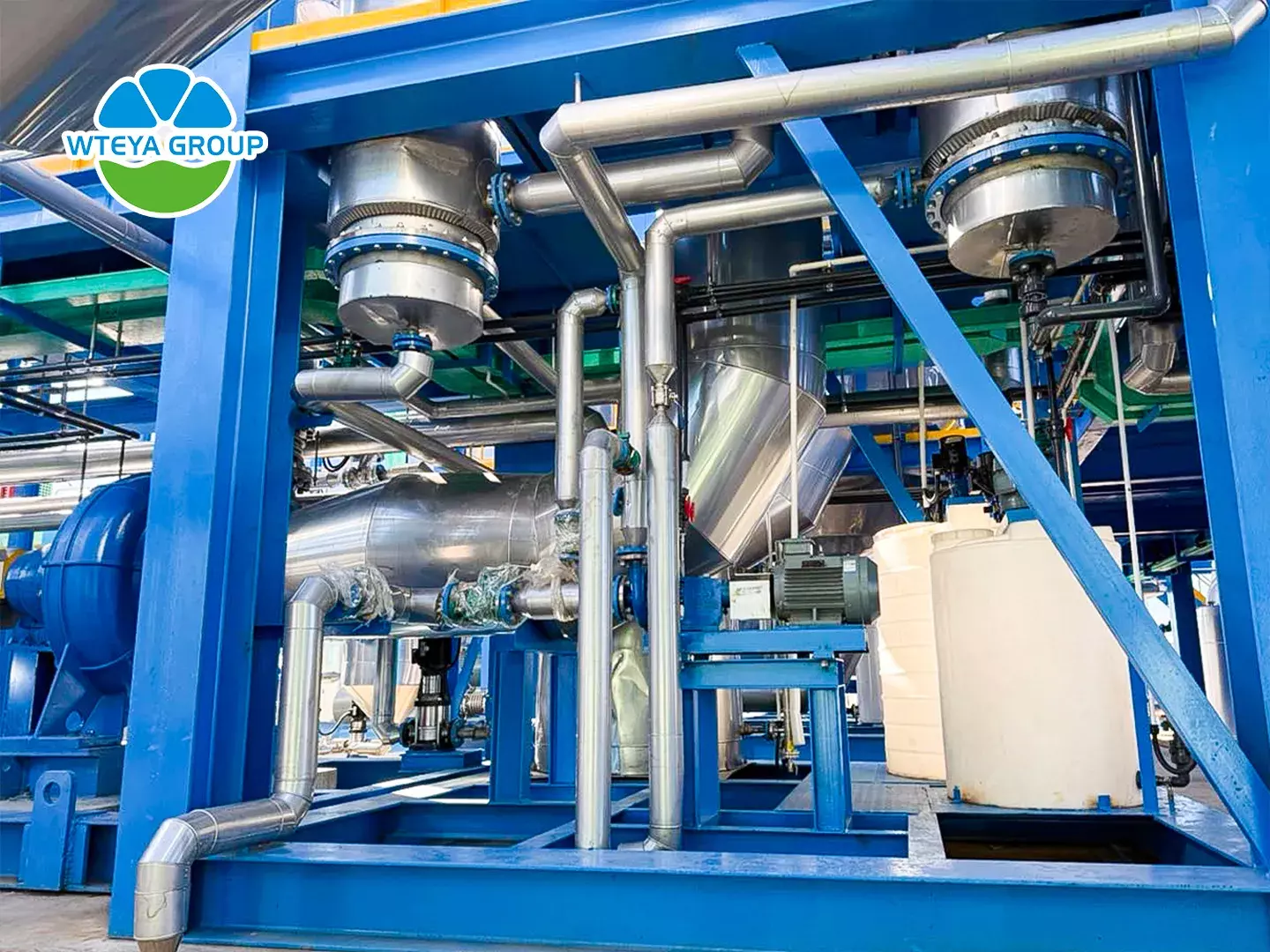
A roots blower is a positive-displacement machine with two counter-rotating lobes. It traps a fixed volume of vapour and pushes it into the discharge line without internal compression, so the pressure rise appears as a back-pressure pulse at the outlet. This makes it mechanically simple, oil-free and tolerant of wet, slightly contaminated steam — which is why it is the default choice for small and medium evaporators.
Its practical envelope is a pressure ratio of 1.3 to 2.0 and a volumetric flow from a few hundred to about 150 m³/min. Efficiency typically sits at 55–70% on an adiabatic basis and falls quickly as the pressure ratio rises, because the un-compressed air (or vapour) is then re-compressed externally against full discharge pressure. Discharge temperature rises sharply with pressure ratio, which is why roots-based units are usually limited to a temperature lift of about 8–10 °C unless inter-stage cooling is added.
The penalties are acoustic and mechanical: sound pressure levels of 85–105 dB(A) are normal, so an acoustic enclosure or inlet and outlet silencers are mandatory; lobe clearances wear if carryover droplets or crystals reach the machine, so a well-designed mist eliminator and, where necessary, a washable inlet separator are part of the compressor package rather than an accessory.
🌀 Centrifugal Compressors: Efficiency Where the Duty Is Large
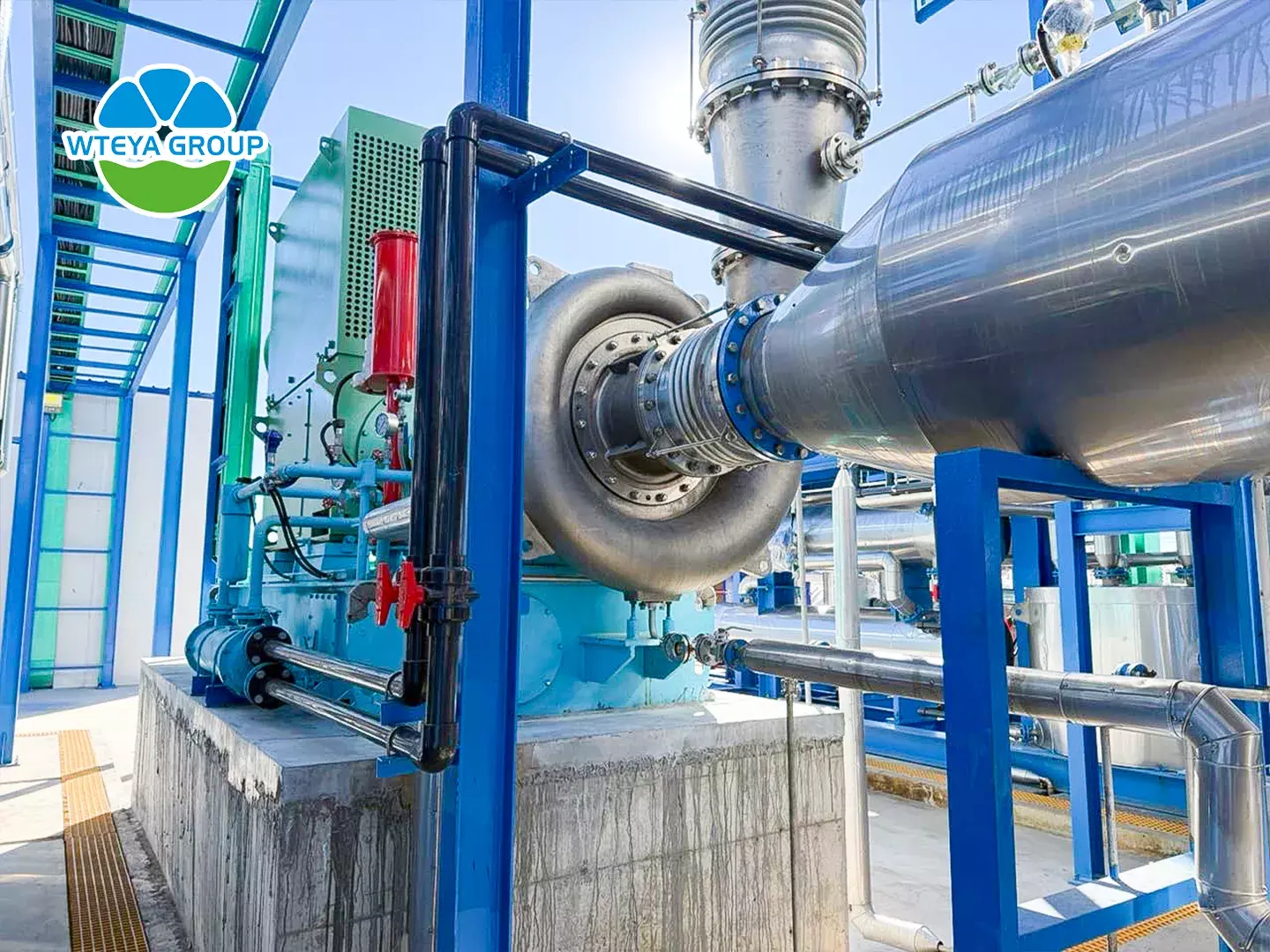
A centrifugal (turbo) compressor accelerates vapour with a high-speed impeller and converts the velocity into pressure in a diffuser. Because compression is continuous and internal, isentropic efficiency of 75–82% is achievable — a genuine advantage when the machine runs 8,000 hours a year. Single-stage units cover a pressure ratio of about 1.2 to 1.8; two-stage machines with intercooling extend that to 2.5 and beyond.
The economics invert above roughly 30–50 m³/min of suction flow: below that, a centrifugal impeller becomes too small for its tip clearance and Reynolds-number losses, and the roots blower wins on both capital cost and efficiency. Above it, the centrifugal machine is smaller, quieter and cheaper to run, and the capital premium of 2–3 times a roots blower is recovered in two to four years of continuous operation.
Centrifugal machines bring their own operating discipline. Output is regulated by inlet guide vanes, variable speed or a combination, giving a turndown of roughly 50–110% of design flow; below the surge line the machine must be protected by an anti-surge recycle valve, and the control system has to be able to open it fast enough to survive a sudden loss of evaporator load. High-speed shafts on magnetic or film-riding bearings avoid oil contamination of the steam circuit, which matters when condensate is returned to the process.
📊 Selection by Evaporation Duty
The table below summarises the working rule used in most MVR designs. It is a starting point, not a substitute for a compressor datasheet at your actual suction conditions.
| Evaporated water, t/h | Recommended machine | Typical pressure ratio | Notes |
|---|---|---|---|
| 0.5 – 5 | Roots blower (single or two-stage) | 1.3 – 1.8 | Lowest capital cost; acoustic enclosure required |
| 5 – 15 | Roots blower or small centrifugal | 1.5 – 2.0 | Compare lifecycle cost at your electricity price |
| 15 – 50 | Centrifugal, single stage | 1.4 – 1.8 | IGV + VFD turndown; anti-surge mandatory |
| > 50 | Centrifugal, two stage with intercooling | 1.8 – 2.5 | Best specific power; higher maintenance competence needed |
Two caveats apply. First, a high boiling point elevation — common in brines and in crystallising duty — consumes pressure ratio that the table does not account for, so a machine that looks adequate on water alone may be marginal on your liquor. Second, when the required lift exceeds about 10 °C, two roots blowers in series are rarely the best answer; a two-stage centrifugal or a thermal vapour recompression hybrid usually wins on power.
🎯 Five Data Points to Fix Before You Specify
1. Secondary vapour mass flow. Not the feed flow and not the product flow — the mass of vapour the compressor must handle, including flash vapour from the recirculation loop.
2. Suction pressure and temperature. These set the specific volume, and therefore whether the machine is physically buildable at your duty.
3. Pressure ratio from the real temperature difference. Derive it from the actual heating-shell temperature you intend to run, not from the nominal design point of the evaporator.
4. Boiling point elevation and non-condensable load. Both steal pressure ratio. A vacuum system that cannot hold the design pressure will make a correctly sized compressor look inadequate.
5. Turndown and fouling allowance. State the minimum stable capacity you need and the fouling factor you expect at end of run; a compressor selected at exactly 100% of clean duty has no margin for either.
⚠️ Four Specification Mistakes That Cost Energy
Specifying the compressor on water-vapour duty while the plant will run on brine is the most common error; the resulting shortfall in pressure ratio shows up as an evaporator that runs at 70% of nameplate. Omitting an anti-surge strategy on a centrifugal machine leads to trips at low load that operators work around by running hotter than necessary, which accelerates scaling. Selecting a roots blower without checking the acoustic requirement adds an unplanned enclosure and silencer cost after the order. And neglecting carryover protection destroys lobe or impeller clearances within a season — droplet separation belongs in the compressor scope, not in someone else’s.
🏆 Why Choose WTEYA
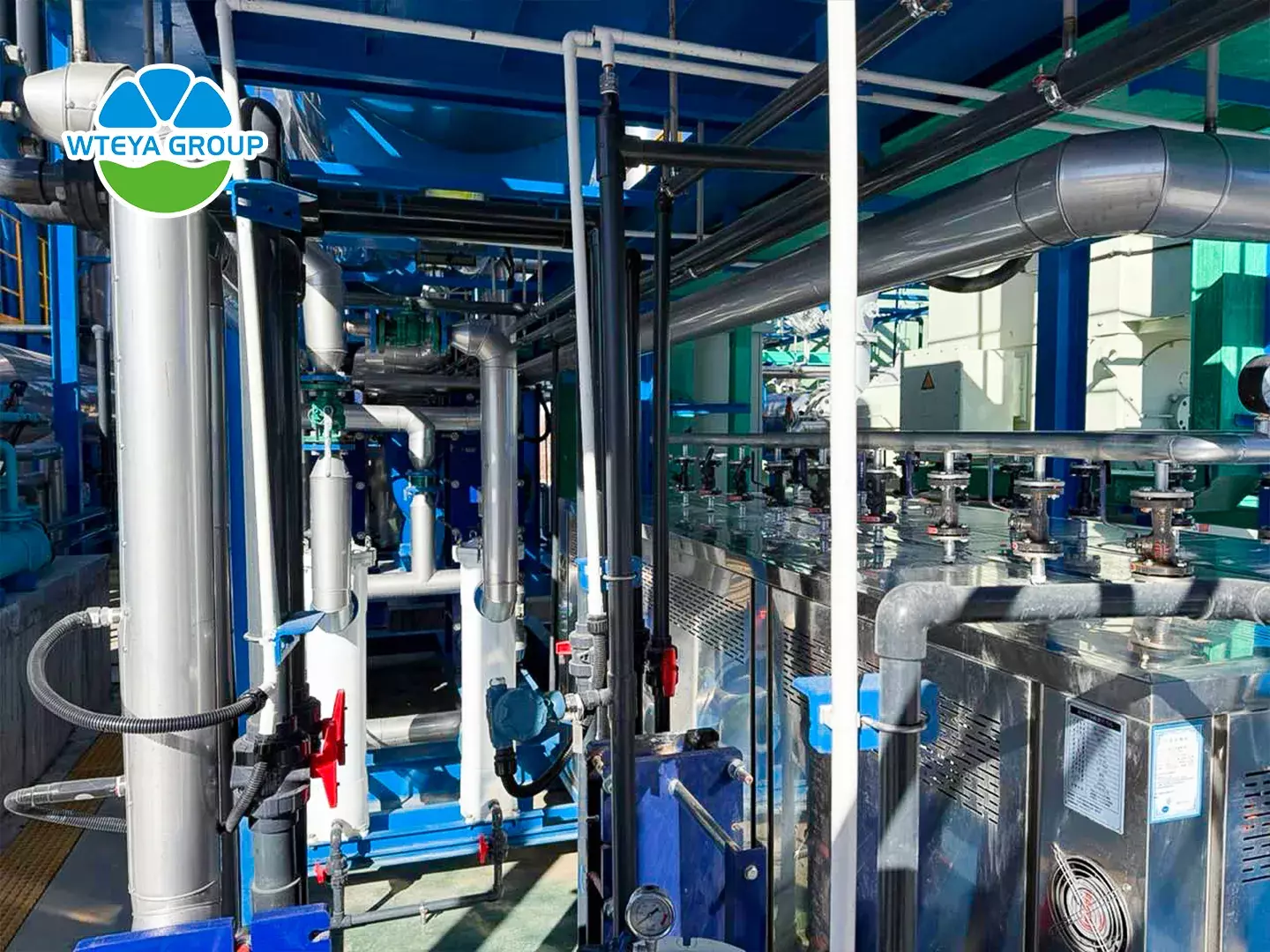
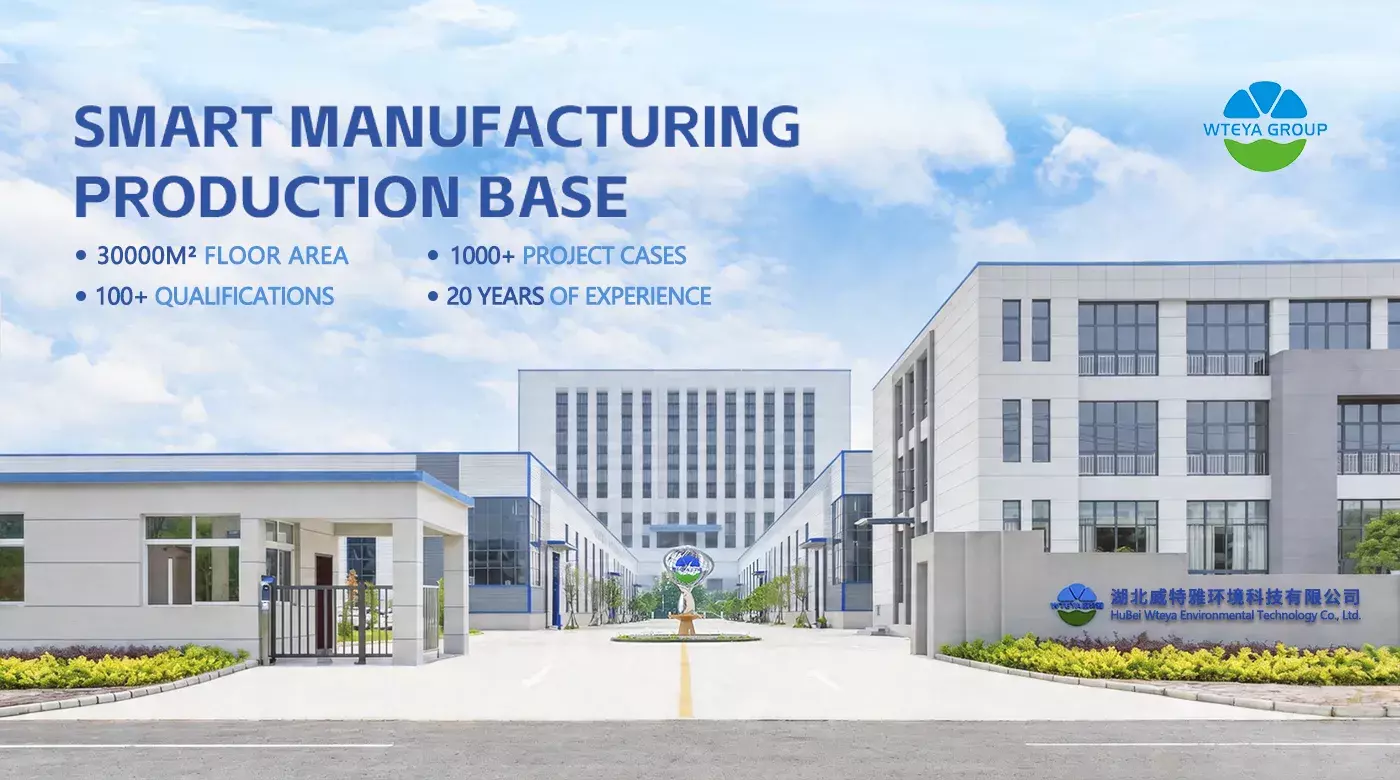
WTEYA has supplied evaporation and crystallisation systems since 2009, with more than 2,000 customers across 30 provinces and a 30,000 m² manufacturing base in Jingshan. Compressor selection is treated as part of the process design: our engineers calculate the pressure ratio from your liquor composition, boiling point elevation and required temperature difference, then match the machine to the duty and to your electricity cost — including falling film evaporator and forced circulation configurations where the compressor envelope differs.
Systems are built around our own tubular heat exchanger and vessel fabrication, tested before shipment, and supported through commissioning and operator training. For projects with specific material or acoustic requirements, we provide customised designs and full OEM & ODM services.
❓ Frequently Asked Questions
Can a roots blower be upgraded to a centrifugal compressor later?
Mechanically yes, but the evaporator shell, piping and control philosophy usually have to change with it. It is cheaper to size the vapour line and the compressor foundation for the larger machine at the outset.
What pressure ratio do I need for a 10 °C temperature difference?
For water vapour around 70–90 °C it is roughly 1.6–1.8. Add the boiling point elevation of your liquor on top; a brine with 8 °C elevation can push the required ratio past 2.2 and out of single-stage roots territory.
How much does compressor efficiency actually save?
Moving from 62% to 78% efficiency at the same duty cuts compressor power by about 20%, which on a 10 t/h unit is typically 60–100 kW — worth several thousand euros a year at industrial tariffs.
Schedule a video call with our engineers to explore your options.
📲 WhatsApp: +86-1800 2840 855
📧 Email: info@wteya.com
🌐 Website: www.wteya.com
Previous: Why Do Manufacturing Companies Need to Establish Wastewater Recycling and Reuse Systems?
Next: No More