






How Can Industrial Wastewater Evaporators Prevent Scaling and High Energy Consumption? Process Design Is the Key
When industrial wastewater enters an evaporation system, the biggest challenge is often not the evaporation of water itself. Instead, it is the series of operational problems caused by the continuous concentration of salts, organic compounds, and other contaminants as water is removed. In particular, high-salinity and high-concentration wastewater can easily lead to scaling, foaming, corrosion, and declining heat transfer efficiency during evaporation.
Therefore, the suitability of an industrial wastewater evaporator for an actual industrial facility should not be judged solely by its evaporation capacity or theoretical energy consumption. Its ability to handle fluctuations in wastewater quality, maintain stable heat transfer over extended operating periods, control scaling rates, and consistently produce condensate of suitable quality is equally important.
Why Is Industrial Wastewater More Difficult to Evaporate Than Ordinary Wastewater?
The evaporation of relatively clean water is a straightforward process. Industrial wastewater, however, often contains considerable amounts of dissolved salts, organic compounds, hardness-forming substances, and other contaminants. As evaporation progresses, water is continuously removed, while most of these substances remain in the circulating liquid and become increasingly concentrated.
As the concentration rises, certain substances may gradually approach their solubility limits and begin depositing on heat transfer surfaces. If the wastewater also contains oils, surfactants, or high concentrations of organic matter, foaming and sticky deposits may develop during operation, further affecting vapor-liquid separation and heat transfer performance. This means that an industrial wastewater evaporator must handle a continuously changing concentration system. Feedwater characteristics, concentration ratios, operating temperatures, and circulation conditions are closely interconnected. Poor control of any one of these factors can affect the stability of the entire process.
Scaling Is a Major Challenge to Long-Term Evaporator Performance
Scaling in industrial wastewater evaporation systems commonly occurs near heat transfer surfaces. Calcium, magnesium, silica, and compounds such as carbonates and sulfates can become increasingly concentrated as water evaporates. When local concentrations exceed their solubility limits, these substances may precipitate and accumulate on the heat transfer surfaces.
Once a scale layer develops, heat transfer efficiency gradually decreases. To maintain the original evaporation capacity, the system may require additional energy input, although the actual evaporation rate may not increase proportionally. Continued operation can also lead to narrower circulation passages, localized blockages, and more frequent cleaning requirements.
For this reason, industrial wastewater evaporator design should consider more than evaporation capacity alone. It must account for changes in wastewater characteristics at different concentration stages. Proper control of the concentration endpoint, circulation velocity, heat transfer conditions, and operating temperature is often more important than simply increasing evaporation intensity.
How Does MVR Technology Reduce Energy Consumption in Industrial Wastewater Evaporation?
Traditional evaporation systems mainly rely on external steam to provide the required heat. The secondary vapor generated during evaporation is usually condensed and discharged, meaning that a considerable amount of thermal energy may not be fully recovered.
Mechanical Vapor Recompression (MVR) technology changes this operating principle.
During evaporation, the generated secondary vapor enters a compressor, where its pressure and temperature are increased through mechanical compression. The recompressed vapor then regains sufficient thermal energy to serve as a heating source and is returned to the evaporator for reuse.
In this way, secondary vapor is transformed from a byproduct that would otherwise be condensed into a reusable energy source.
This process reduces the system's continuous dependence on external steam. Electricity consumption is mainly associated with equipment such as the vapor compressor and circulation pumps. For industrial wastewater treatment projects requiring long operating hours, reducing external heat demand can have a significant impact on long-term operating costs.
However, MVR technology alone cannot solve every operational challenge. The compressor handles energy recovery, but the evaporator's heat transfer design, vapor-liquid separation, circulation system, and automatic control strategy also determine whether the complete system can operate reliably over time.
Evaporator Design Determines Long-Term Operational Stability
An industrial wastewater evaporator is not an isolated piece of equipment. It is an integrated system in which multiple components work together.
The evaporator provides heat transfer, the circulation system maintains liquid movement, the separator reduces liquid droplet carryover, the compressor recompresses secondary vapor, and the control system adjusts operating conditions according to changes in temperature, pressure, liquid level, and flow rate.
Among these components, heat transfer structure and circulation methods are particularly important for preventing localized concentration buildup.
If wastewater is unevenly distributed across the heat transfer surfaces, certain areas may experience higher local concentrations and temperatures, increasing the risk of scaling. Proper liquid distribution and stable circulation help maintain more uniform heat transfer conditions while reducing localized deposition.
Vapor-liquid separation also deserves attention. Organic compounds, salts, and other contaminants in industrial wastewater may be carried into the vapor stream through entrained liquid droplets. If separation performance is insufficient, condensate quality may deteriorate, potentially increasing contamination and corrosion risks in downstream equipment.
Therefore, an effective evaporation system does not optimize individual components in isolation. Instead, heat transfer, circulation, separation, and automatic control must work together as part of a coordinated operating process.
A Higher Water Recovery Rate Does Not Mean Increasing Evaporation Intensity Indefinitely
Many industrial facilities expect evaporators to produce as much water as possible. However, in practical engineering applications, a higher water recovery rate is not necessarily better under every operating condition.
If operating temperatures or concentration levels are continuously increased to achieve a higher instantaneous evaporation rate, the system may also experience greater risks of scaling, foaming, and corrosion.
Although the equipment may initially achieve a higher evaporation capacity, shorter operating cycles and more frequent cleaning can increase overall operating costs.
A more practical approach is to determine suitable evaporation conditions according to the actual characteristics of the wastewater.
For high-salinity wastewater, the composition of dissolved salts and their precipitation behavior need to be evaluated. For wastewater containing organic compounds, attention should be given to how increasing concentrations affect foaming and heat transfer. For concentrate produced by membrane systems, the appropriate evaporation endpoint and subsequent crystallization process should also be determined.
The objective of an industrial wastewater evaporation system should not simply be to achieve the highest water production rate under a particular operating condition. Instead, it should maintain stable water production with reasonable energy consumption and acceptable maintenance intervals.
How Does WTEYA Design Evaporation Systems for Different Types of Industrial Wastewater?
Industrial wastewater varies considerably in composition, so evaporation systems should not rely on a one-size-fits-all equipment configuration.
WTEYA evaluates factors such as feedwater characteristics, treatment capacity, salt composition, organic matter content, concentration requirements, and final discharge or water reuse targets when selecting and matching pretreatment and evaporation processes.
Before wastewater enters the evaporator, appropriate pretreatment can reduce suspended solids, hardness, oils, and other substances that may cause operational problems. This helps reduce the burden on downstream heat transfer equipment.
For high-salinity concentrates, potential scaling and crystallization behavior during concentration should also be assessed according to the actual wastewater composition. These findings help determine suitable circulation methods and concentration endpoints.
Within the evaporation system, particular attention is given to the coordination of heat transfer structures, circulation conditions, vapor-liquid separation, and the MVR compressor.
The automatic control system monitors key operating parameters and adjusts system conditions in response to changes in feedwater quality and operating load. This helps the equipment accommodate fluctuations that commonly occur in actual industrial production environments.
For projects requiring further treatment toward zero liquid discharge (ZLD), MVR evaporators can also be integrated with membrane concentration and crystallization processes. By connecting upstream volume reduction, evaporation concentration, and final solid-liquid separation, these technologies can form a more complete industrial wastewater treatment solution.
Long-Term Operational Stability Is the Real Measure of an Industrial Wastewater Evaporator
Industrial wastewater treatment is not a one-time laboratory experiment. It is a long-term engineering process that must operate alongside continuous industrial production. An evaporator that achieves a high evaporation rate under laboratory conditions does not necessarily maintain the same performance after installation in an actual factory. A reliable industrial wastewater evaporator must be capable of handling fluctuations in feedwater quality, continuous salt accumulation, variations in operating loads, and scaling and maintenance challenges associated with extended operation.
Energy consumption is only one performance indicator. Continuous operating capability, condensate quality, cleaning intervals, maintenance costs, and the final disposal or treatment of concentrated liquid should also be included in the overall evaluation.
MVR technology addresses energy recovery during evaporation, while sound process design addresses operational stability when treating complex wastewater. Only when these two aspects work together can an industrial wastewater evaporator effectively support wastewater volume reduction, concentration, water reuse, and zero liquid discharge applications.
For high-salinity, high-concentration, and complex industrial wastewater, selecting evaporation equipment should involve more than comparing technical specifications. The first step is to evaluate the actual wastewater characteristics and operating requirements, then determine whether the proposed system can maintain reliable performance over the long term. This is what allows industrial wastewater evaporation technology to move beyond simply achieving treatment targets toward delivering stable and sustainable operation.
Why Partner with WTEYA?
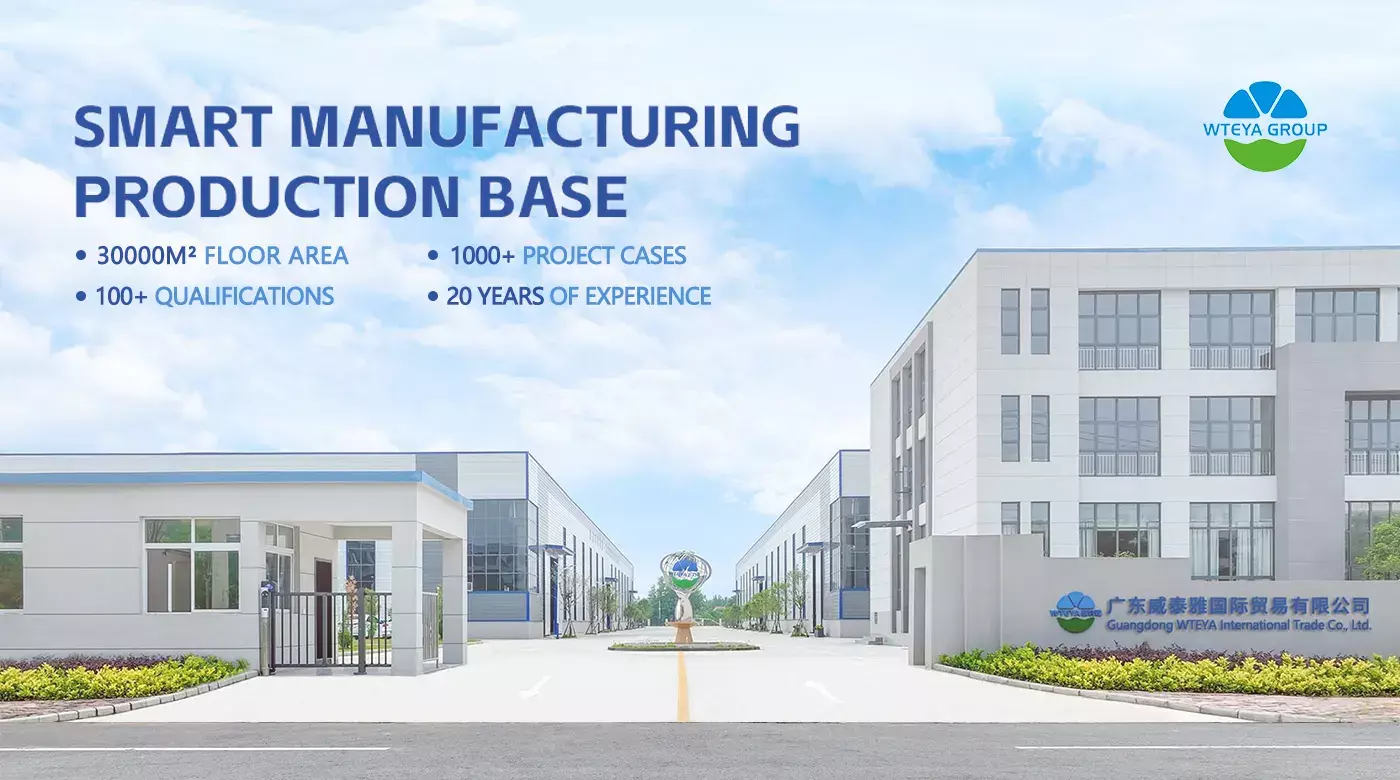
• Nearly 20 years of industry experience
• Trusted by global leaders including Foxconn, Huawei, Ganfeng Lithium, Ronbay Technology
• 100+ success cases worldwide
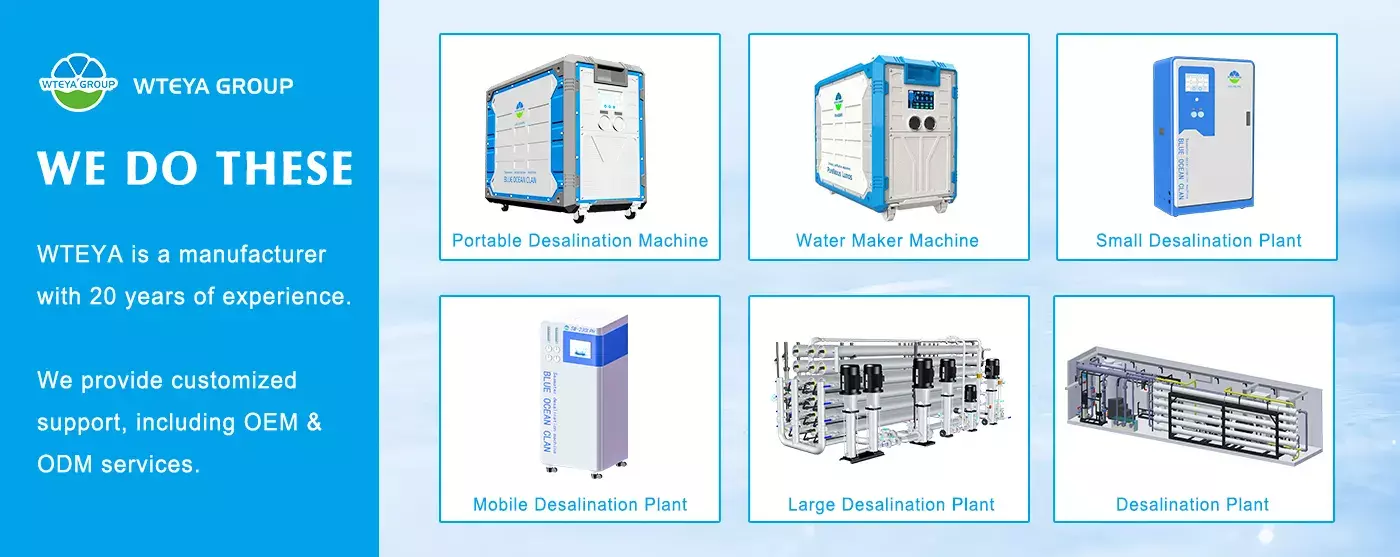
• OEM & ODM customization available
Become a WTEYA Distributor!
We are expanding global partnerships:
• Preferential policies
• Professional training
• Full technical support
Let us help you achieve exceptional water quality and operational sustainability!
📲 WhatsApp: +86-1800 2840 855
📧 Email: info@wteya.com
🌐 Website: www.wteya.com