






WTEYA Hosts Mac Waste Group Australia for Leachate Treatment
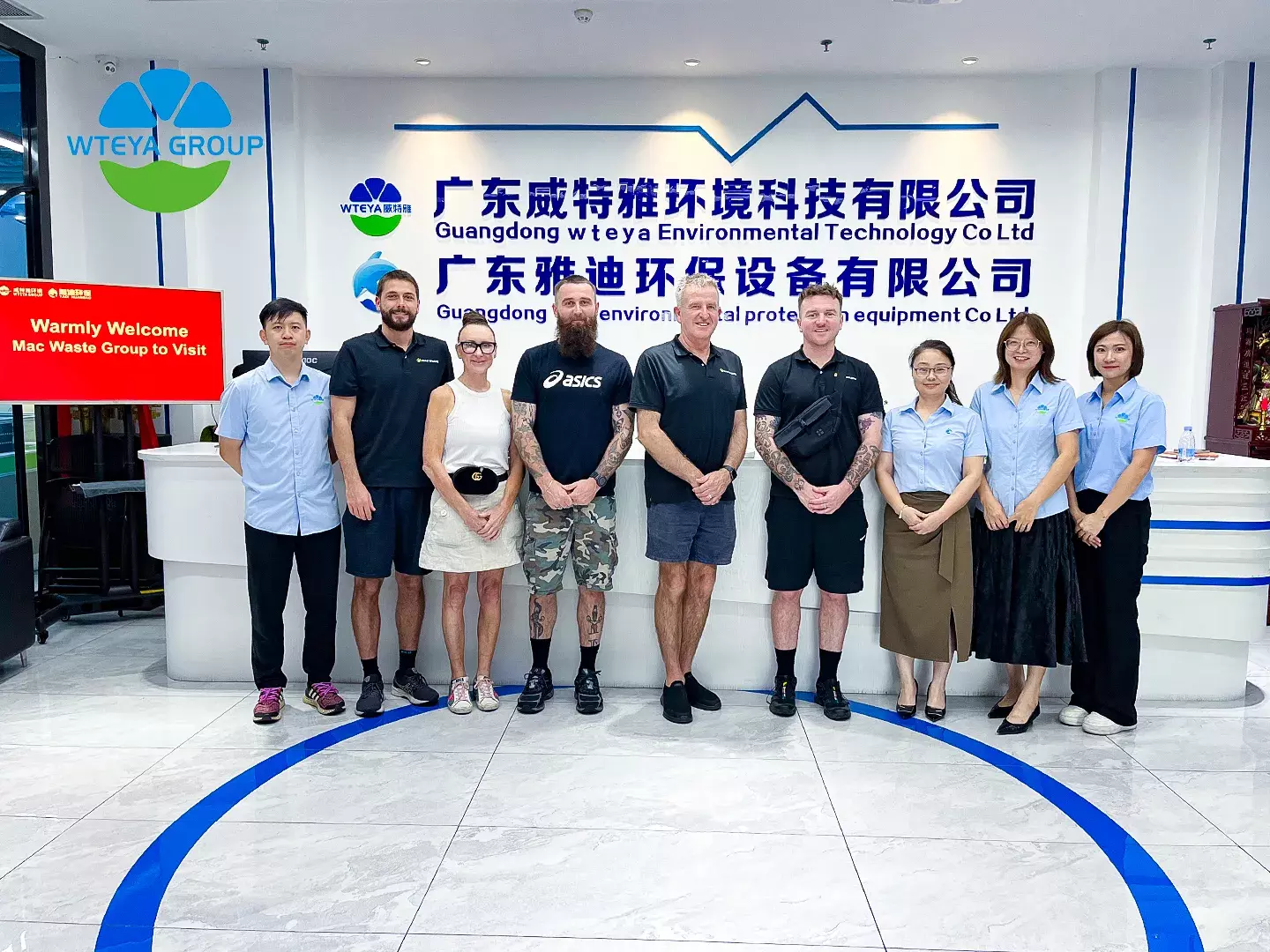
Leachate treatment brought Mac Waste Group to WTEYA on 16 November 2026. Four representatives of the Australian septic and liquid waste contractor met five WTEYA engineers and sales staff at the company’s Guangdong base to work through how a full-process leachate treatment line would be sized for Australian site conditions — from tanker reception to the last litre of residue.
🤝 Why an Australian Liquid Waste Operator Came to Guangdong
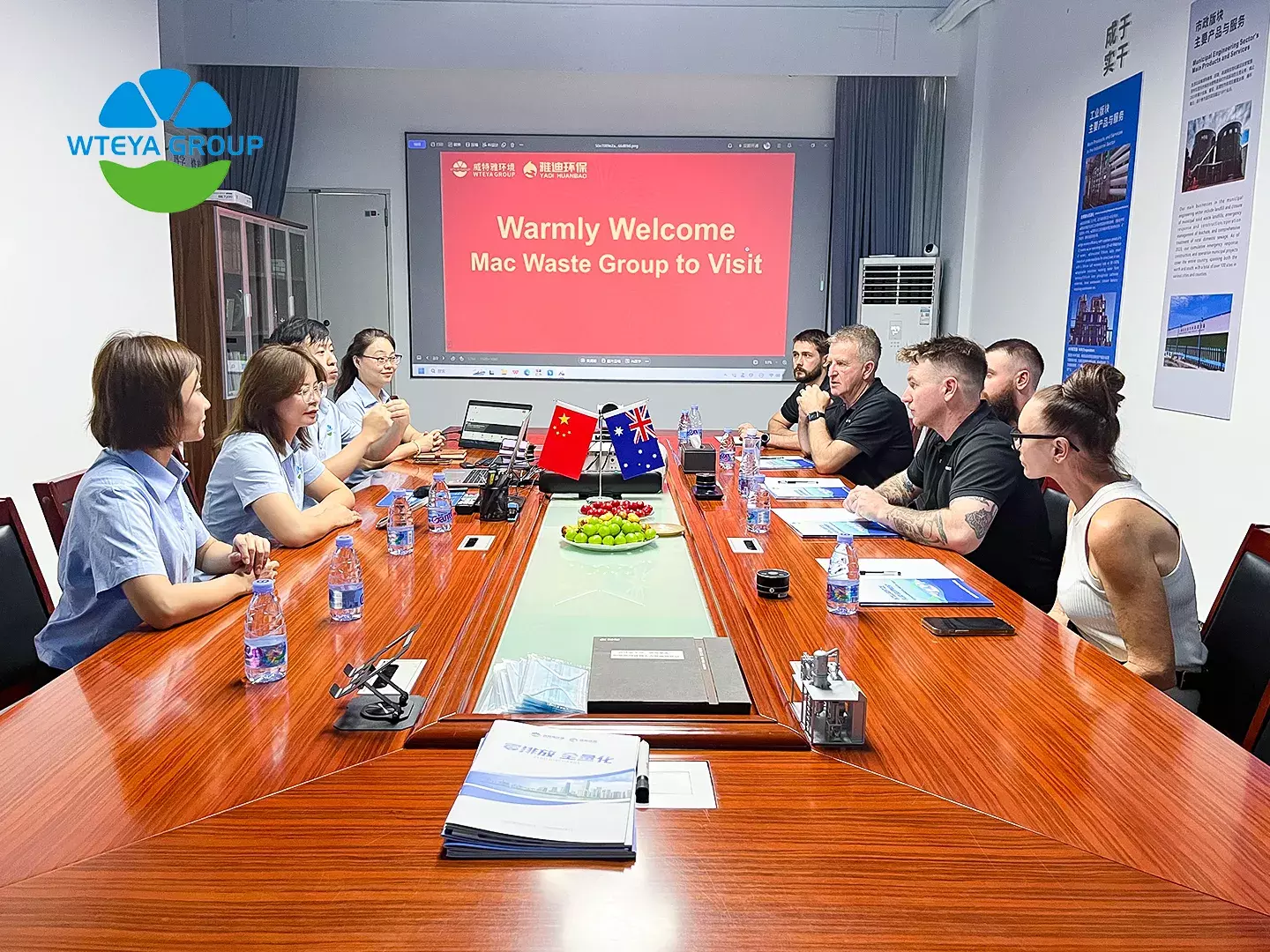
Leachate treatment was the single subject on the table when four representatives of Mac Waste Group travelled from Australia to WTEYA’s engineering base in Guangdong on 16 November 2026. Mac Waste Group works in septic tank servicing and liquid waste management, a business where every load collected has to be treated or carted somewhere that will accept it. The delegation was received by five WTEYA staff, and the welcome screen in the meeting room read, simply, Warmly Welcome Mac Waste Group to Visit.
The purpose was not a catalogue review. The visitors arrived with operating conditions rather than a shopping list: high-strength leachate from septic and liquid waste collection, seasonal volume swings, and the disposal cost that follows every tonne of concentrate leaving site. Their question was how those conditions map onto one continuous treatment line instead of a stack of skids from different suppliers.
🏢 The Visit, Step by Step
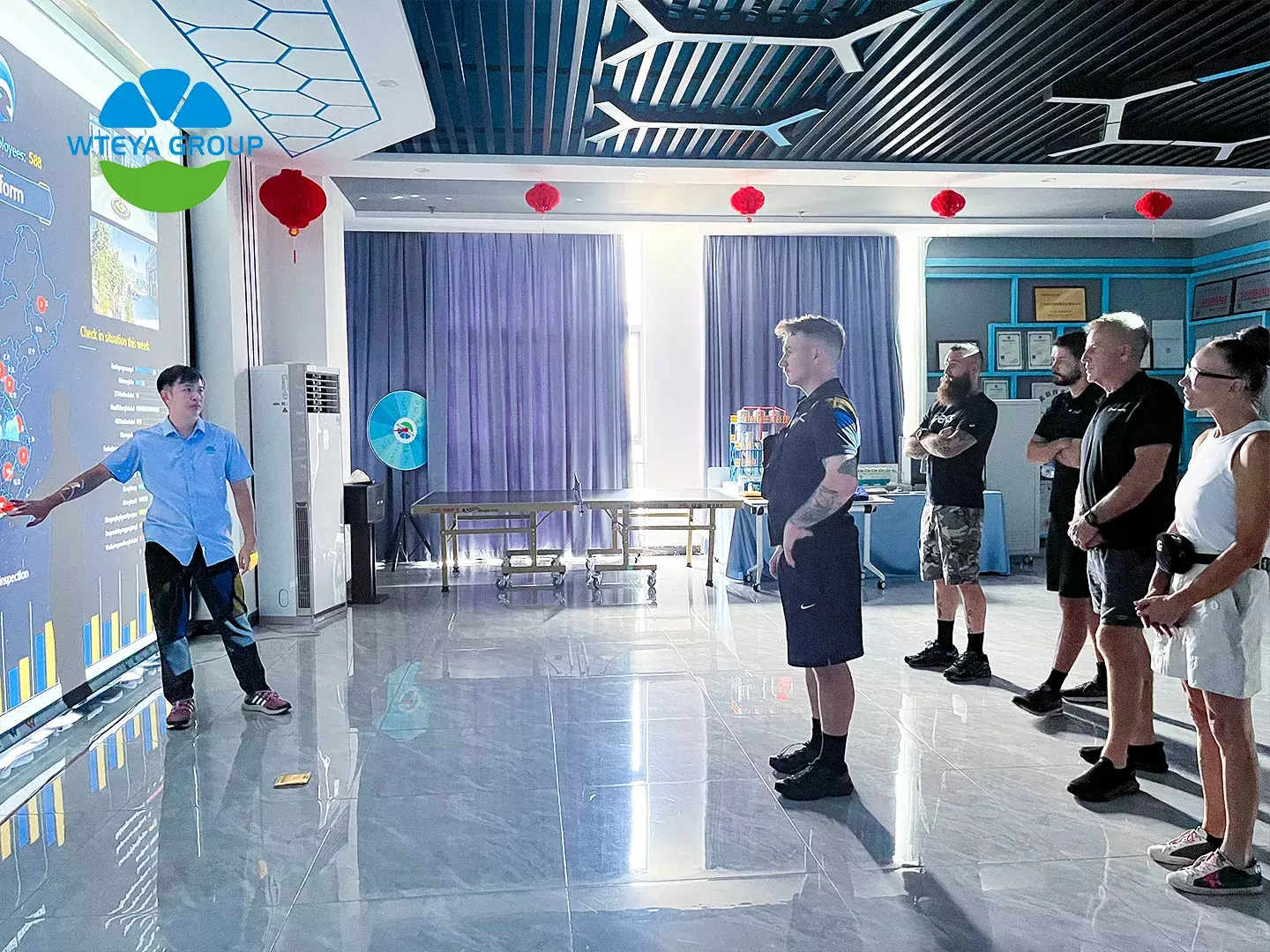
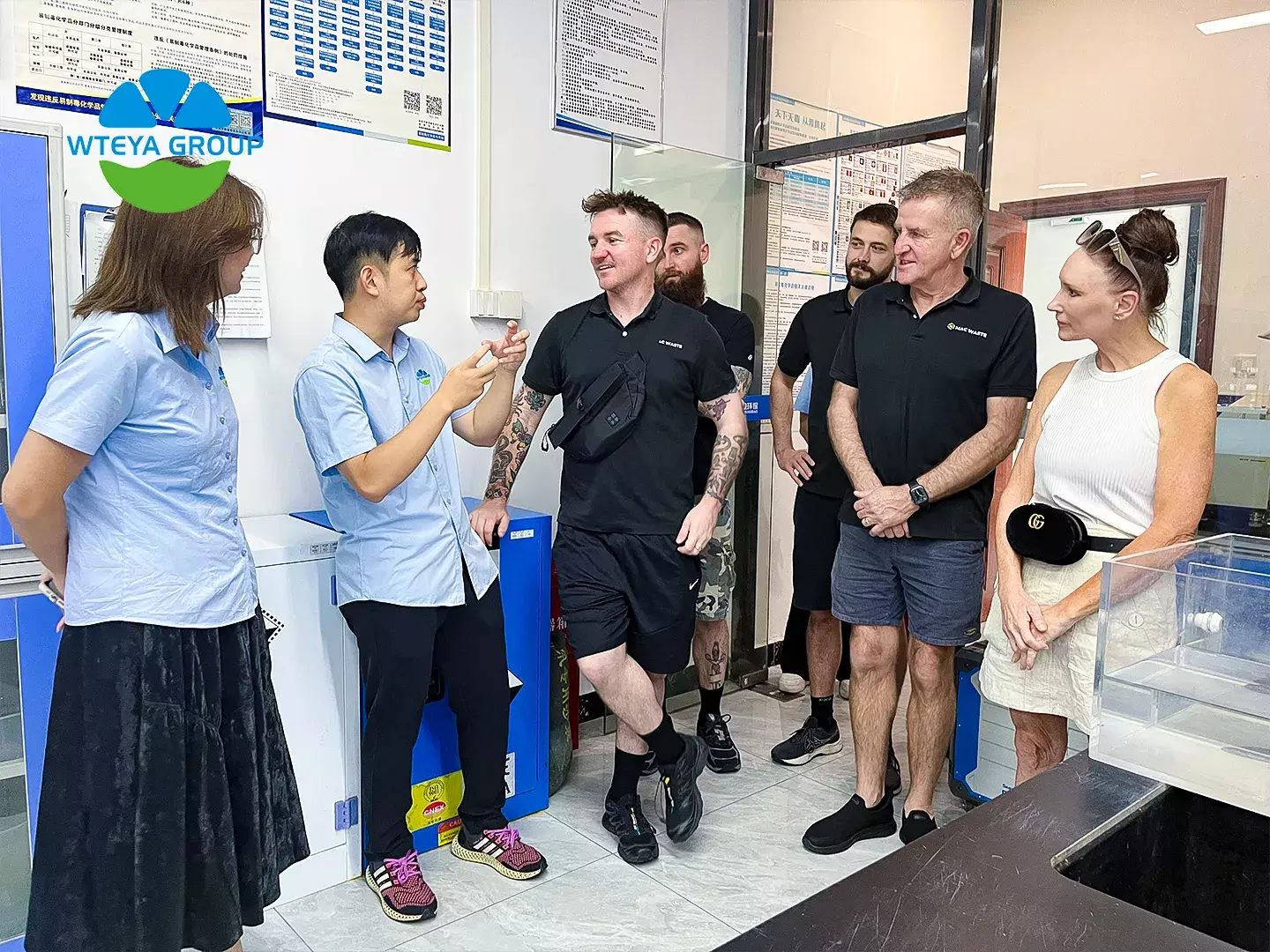
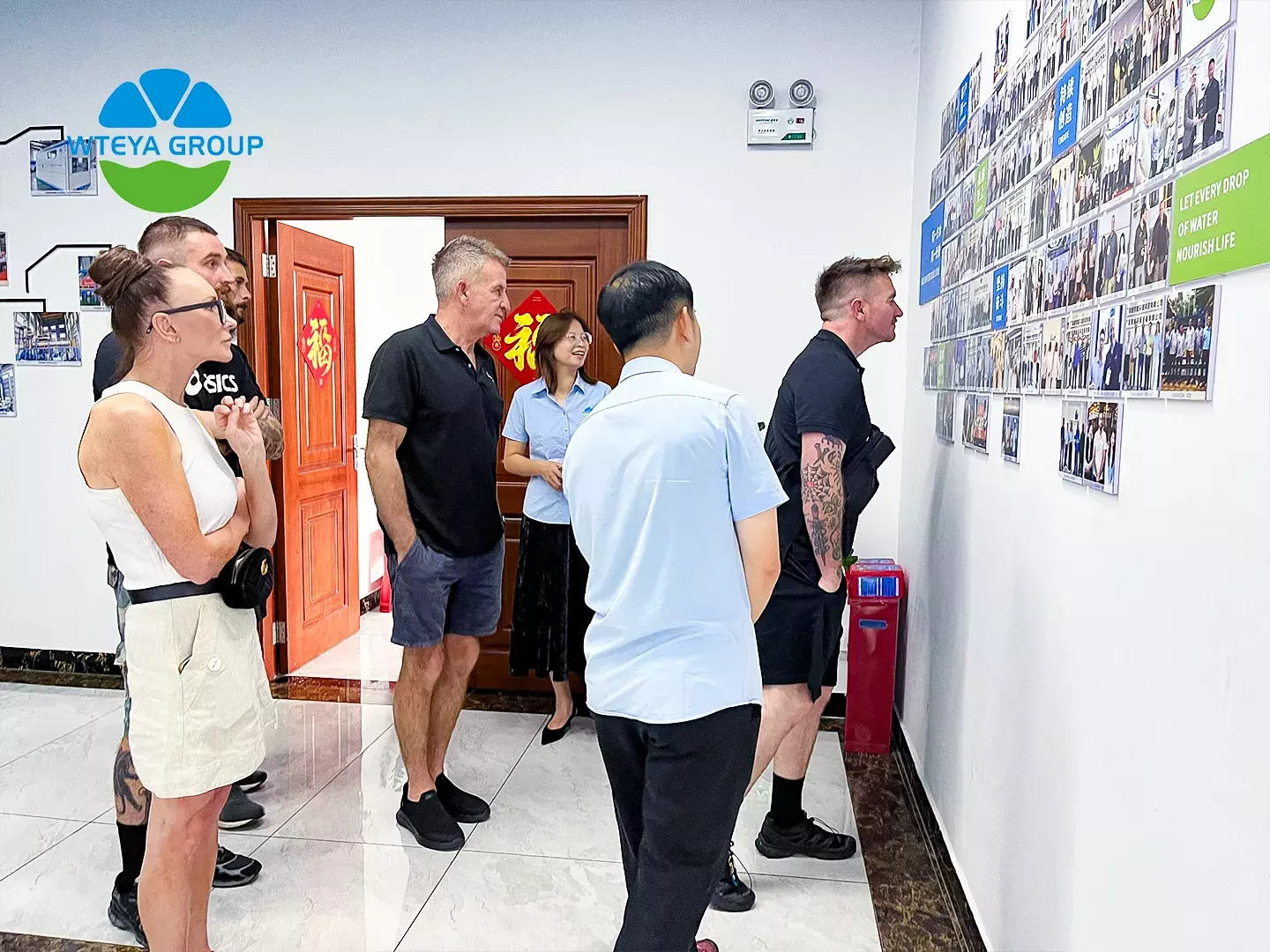
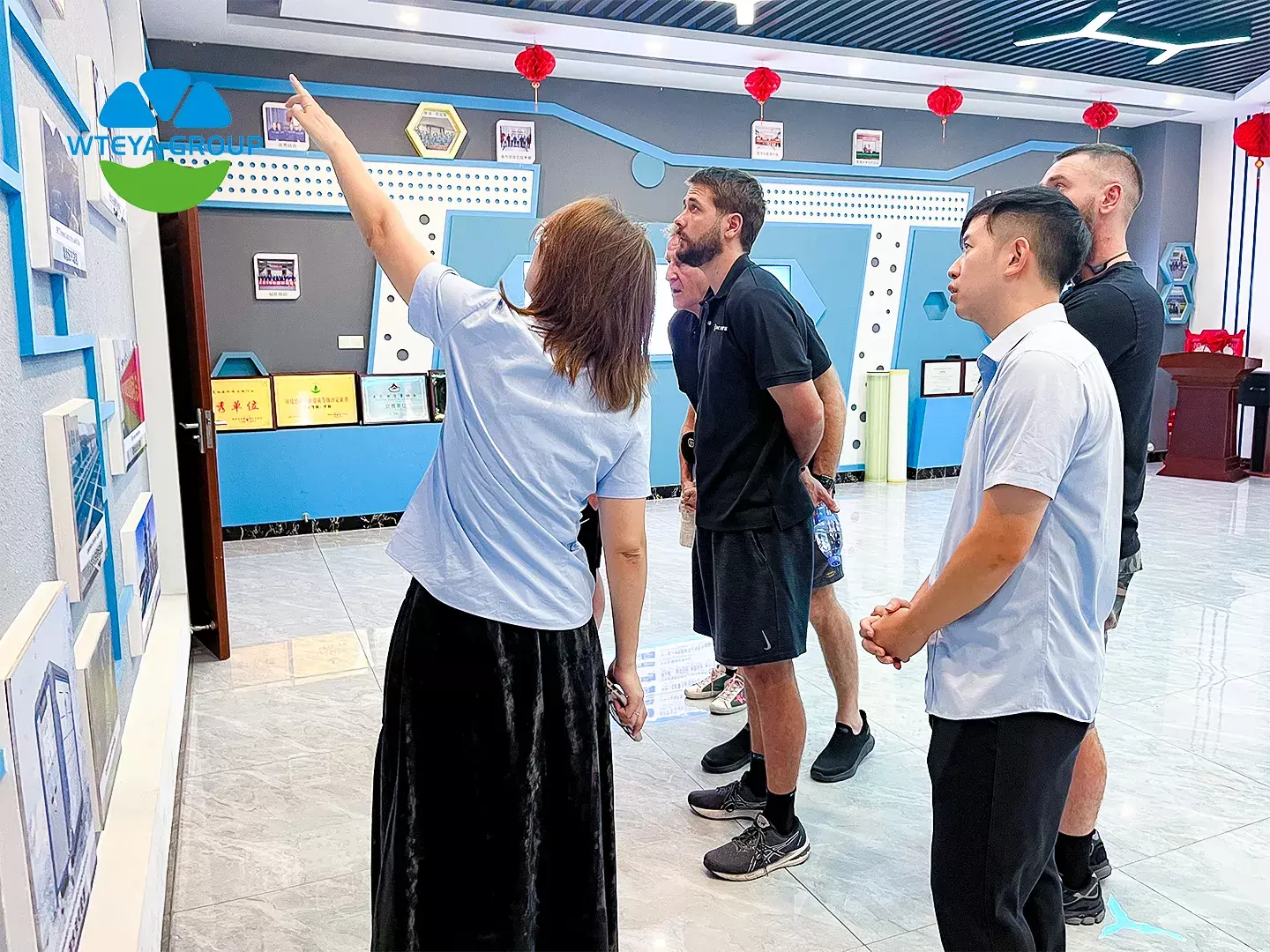
The day opened in the WTEYA GROUP reception area, where an engineer walked the delegation through the group’s operations dashboard — active projects, inspection status and delivery schedule — and then through the project wall that records installations delivered to overseas clients.
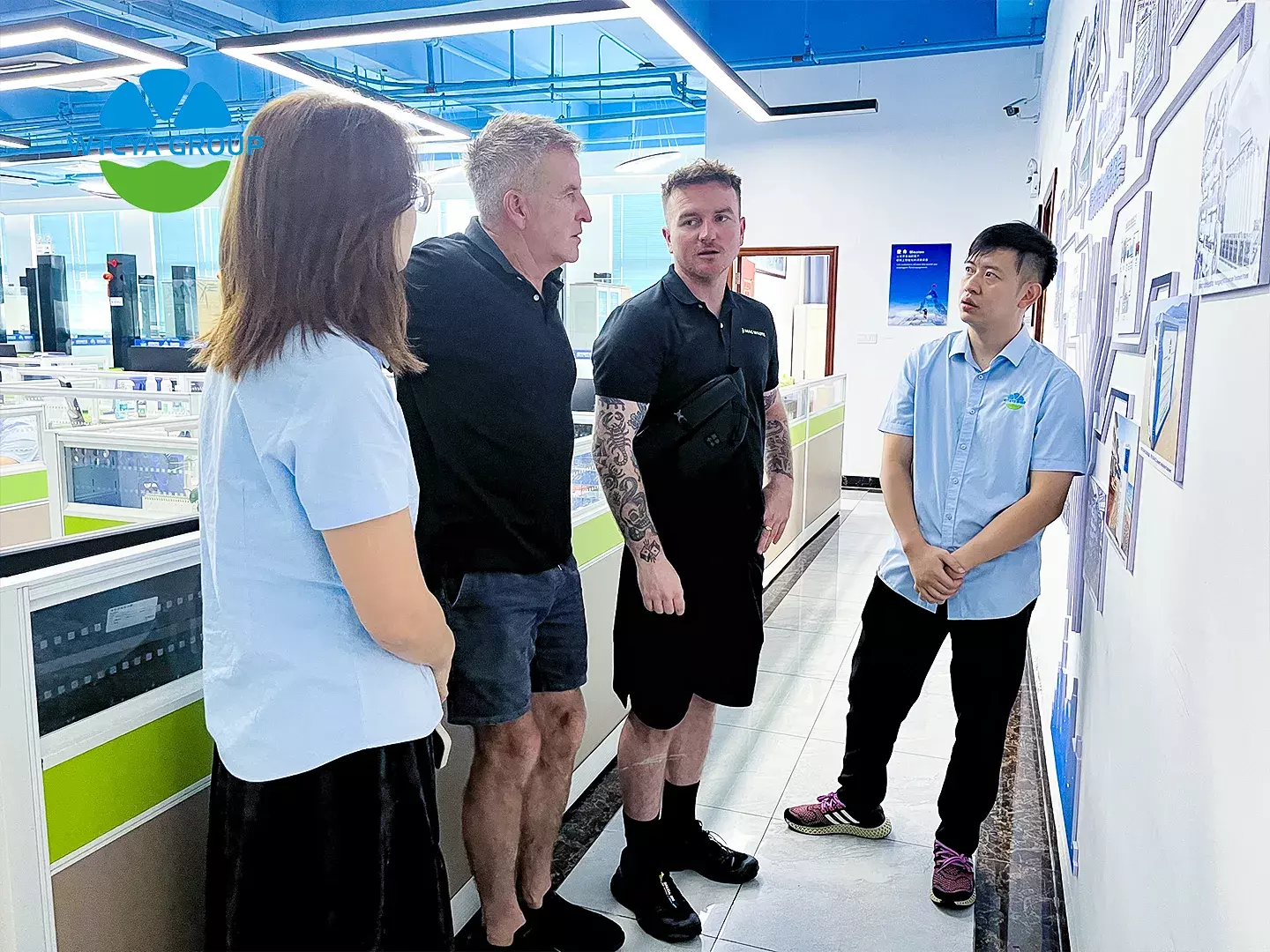
From the reception the group moved past the engineering offices to the showroom and the certificate display, with WTEYA staff explaining how projects are documented from drawing release to commissioning. The visit closed in the meeting room, four Australian representatives on one side and five WTEYA staff on the other: process engineers, a project manager and export sales, with both national flags on the table. The session that followed was technical rather than promotional.
💧 The Technical Core: Treating Leachate as One Process
WTEYA presented leachate as one continuous process with four defined stages, each sized from measured data rather than from rules of thumb. The stages link together, and that is the whole argument for a full-process leachate treatment line.
Characterisation and pretreatment. COD, ammonia nitrogen, suspended solids, oil and grease and heavy metals are measured first. Coagulation, sedimentation and pH correction remove what evaporation cannot handle economically, and equalisation absorbs the batch rhythm of tanker deliveries.
Evaporation and concentration. An MVR evaporator recovers the latent heat of the vapour it produces, so energy circulates inside the machine rather than being vented to atmosphere. Volume falls sharply and dissolved salt leaves the water phase as a concentrated residue.
Membrane polishing. Reverse osmosis, nanofiltration or a membrane bioreactor brings the condensate to the discharge or reuse target, and any reject stream returns to the evaporator instead of leaving the plant as waste.
Residue management. The concentrate is reduced to the smallest stream that can be crystallised, dried or sent for licensed disposal — which is where the real cost of leachate lives.
The point of the sequence is that each stage protects the next. Skipping pretreatment puts the evaporator in contact with scalants and fouling it was never designed for; skipping evaporation leaves a membrane to handle a salt load that would exceed its recovery within hours.
📋 What Mac Waste Group Wanted to Understand
Three questions dominated the discussion, and all three were about operating reality rather than nameplate specifications.
Electricity first. Evaporation is the most energy-intensive step in the train, and the Australian team wanted consumption per cubic metre at their own inlet concentration, not a generic figure. The honest answer depends on the concentration factor and the boiling point elevation, which is why WTEYA asked for leachate analysis before quoting anything.
Salt and scaling second. Septic and liquid waste leachate carries chloride and sulphate loads that attack both metal and membrane. Material selection, cleaning cycles and the split between evaporative and membrane duty were discussed case by case, including what happens when a tanker load arrives well outside the usual range.
Residue third. A treatment line that produces a liquid waste stream has not solved the problem, it has moved it. The group examined how far volume can be reduced before crystallisation or outsourced disposal becomes the cheaper route, and what that comparison looks like over a full year rather than a single month.
🔜 Practical Next Steps
No contract was signed during the visit and none was expected at this stage. The practical next step is data: leachate characterisation from Mac Waste Group’s sites — COD, ammonia, total dissolved solids, chloride and heavy metals across a full seasonal cycle — which determines stage sizing and the operating cost that can actually be defended.
Against that data WTEYA will prepare a process configuration covering the evaporation and membrane split, the expected volume reduction and the residue route, to be reviewed with the Australian team by video call. For WTEYA the value of the day was simpler than a purchase order: a working session with a liquid waste operator who already knows what a cubic metre of leachate costs to get rid of.
Schedule a video call with our engineers to map your leachate data onto a full-process line. WTEYA manufactures pretreatment, evaporation and membrane systems in house, with customized engineering and full OEM & ODM support.
📲 WhatsApp: +86-1800 2840 855
📧 Email: info@wteya.com
🌐 Website: www.wteya.com