







Is Chemical Defluoridation Alone Enough for Semiconductor Fluoride Wastewater Treatment?
Semiconductor manufacturing processes, including wafer cleaning and etching, often involve hydrofluoric acid (HF) and other fluoride-containing chemicals. As a result, these operations generate wastewater containing significant concentrations of fluoride. In some high-concentration wastewater streams, fluoride levels can reach several hundred or even over 1,000 mg/L. Even after treatment, further removal may be necessary to meet discharge or water reuse requirements.
However, fluoride is not the only pollutant that needs to be considered in semiconductor wastewater treatment.
Depending on the manufacturing process, fluoride-containing wastewater may also contain acidic substances such as nitric acid and sulfuric acid, as well as suspended solids, organic compounds, and elevated concentrations of dissolved salts.
If a treatment system focuses exclusively on reducing fluoride concentrations without addressing salt accumulation, concentrate management, and water reuse requirements, operational instability and difficulties with final wastewater disposal may still occur. For semiconductor projects involving complex wastewater characteristics or high water recovery targets, a more comprehensive approach is often necessary. Instead of relying on chemical defluoridation alone, an integrated treatment process may combine chemical precipitation, advanced fluoride removal, membrane separation, and evaporation crystallization.
Why Is Chemical Defluoridation Alone Not Always Enough?
Chemical precipitation is a well-established method for treating fluoride-containing wastewater from semiconductor manufacturing. By adding calcium-based chemicals, such as lime, fluoride ions react with calcium ions to form calcium fluoride (CaF₂) precipitates. Coagulation, sedimentation, and solid-liquid separation are then used to remove the resulting precipitates from the wastewater. This method offers clear advantages when treating high-concentration fluoride wastewater. It can significantly reduce the fluoride load at a relatively economical operating cost.
However, as fluoride concentrations decrease, continuously increasing lime dosage does not necessarily produce a proportional improvement in removal efficiency. Factors such as pH, calcium concentration, dissolved salts, and other coexisting substances can all influence the precipitation process.
Therefore, chemical precipitation is generally better suited to handling high-concentration fluoride removal rather than completing the entire advanced treatment process in a single reaction stage. This is one reason why multi-stage defluoridation is commonly considered in industrial wastewater treatment system design.
Two-Stage Chemical Defluoridation: Reducing the Initial Fluoride Load
For semiconductor wastewater with high fluoride concentrations, a two-stage chemical treatment process can be considered.
Stage 1: Lime Precipitation
High-concentration fluoride wastewater enters a reaction tank, where lime slurry is added to adjust the pH and promote the formation of calcium fluoride precipitates.
For certain wastewater characteristics, a pH range around 7–8 may provide favorable reaction conditions. However, the optimal operating range should be determined through actual water analysis and treatment trials.
After the reaction is completed, the wastewater enters a sedimentation system to separate calcium fluoride and other suspended solids.
The main objective of this first stage is to remove a substantial portion of the fluoride load while preparing the wastewater for subsequent treatment.
For example, when treating wastewater with fluoride concentrations of approximately 500–2,000 mg/L, properly designed primary chemical treatment can significantly reduce fluoride levels. Actual removal efficiency, however, depends on influent characteristics, chemical dosage, reaction conditions, and sedimentation performance.
Stage 2: Coagulation and Sedimentation
Even after primary sedimentation, the treated wastewater may still contain residual fluoride, fine particles, and colloidal substances.
A second coagulation and sedimentation stage can help improve solid-liquid separation. Coagulants such as polyaluminum chloride (PAC) promote particle aggregation, while polyacrylamide (PAM) can improve floc formation and settling performance.
After these two chemical treatment stages, the fluoride load is further reduced, and suspended solids can also be better controlled.
This provides more stable influent conditions for subsequent advanced fluoride removal. However, when a project requires particularly low fluoride concentrations in the final effluent, these two stages alone may not provide sufficient treatment stability.
Advanced Fluoride Removal: Controlling Residual Fluoride
Once the fluoride concentration has been reduced from a high level to a relatively low level, continuing to add large quantities of precipitation chemicals may become increasingly uneconomical.
At this stage, an additional advanced fluoride removal process may be introduced.
Depending on wastewater characteristics and treatment targets, available options include activated alumina and specialized fluoride-selective ion exchange resins.
Activated alumina has a good affinity for fluoride ions and can be used for advanced treatment following chemical precipitation. For projects requiring lower residual fluoride concentrations, fluoride-selective resins may also be considered.
One important point should be understood:
Advanced fluoride removal is not intended to replace chemical precipitation.
If adsorption materials or ion exchange resins are used directly to treat high-concentration fluoride wastewater, their treatment capacity may be consumed rapidly, increasing material consumption, equipment requirements, and operating costs.
A more practical treatment strategy is to divide the responsibilities between different stages:
Chemical precipitation handles the bulk of fluoride removal, while advanced treatment controls the remaining fluoride.
This approach allows each treatment unit to operate within a more suitable range.
Why Consider Evaporation Crystallization After Fluoride Removal?
For projects that only require wastewater discharge, advanced fluoride removal may bring the treatment process close to its final stage.
However, semiconductor manufacturers often have additional requirements, including higher wastewater reuse rates and overall wastewater volume reduction.
This introduces another challenge.
Even after fluoride removal, the treated wastewater may still contain substantial amounts of dissolved salts. Membrane systems such as reverse osmosis (RO) can improve water quality and recover part of the treated water for reuse in manufacturing or other facility applications.
At the same time, salts and other substances that cannot readily pass through the membrane become concentrated in the RO reject stream.
In other words, membrane separation helps solve the water recovery problem, but it also creates another issue: how should the concentrated wastewater be managed?
If the concentrate is discharged directly, the project may still face significant wastewater disposal requirements, limiting the effectiveness of the overall water reuse strategy.
For semiconductor facilities with high water recovery targets or strict wastewater reduction requirements, evaporation concentration and crystallization may therefore need to be considered.
How Does MVR Evaporation Crystallization Work with Defluoridation?
Mechanical Vapor Recompression (MVR) evaporation crystallization primarily serves to concentrate wastewater and reduce the volume of high-salinity streams. It is not intended to replace the front-end fluoride removal process.
A potential integrated treatment route can be arranged as follows:
Fluoride-Containing Wastewater
↓
Stage 1: Lime Precipitation
↓
Stage 2: Coagulation and Sedimentation
↓
Advanced Fluoride Removal
↓
Membrane Separation
↓
Recovered Water for Reuse
↓
RO Concentrate
↓
MVR Evaporation and Crystallization
The logic behind this combined process is straightforward.
Chemical precipitation reduces the majority of the fluoride load. Advanced treatment controls residual fluoride. Membrane separation recovers reusable water, while MVR evaporation crystallization further concentrates the remaining high-salinity stream. By assigning different treatment responsibilities to different units, the system avoids placing excessive contaminant loads on downstream equipment.
Why Should Fluoride Wastewater Not Enter an MVR System Directly?
In principle, evaporators can process wastewater with high concentrations of dissolved substances. However, for fluoride-containing wastewater, the effectiveness of upstream pretreatment has a direct impact on the long-term operation of the evaporation system.
If the wastewater still contains excessive calcium, fluoride, suspended solids, or other substances with a tendency to form deposits, these components can become increasingly concentrated as water evaporates.
Once deposits accumulate on heat transfer surfaces, several operational problems may occur:
-
Reduced heat transfer efficiency.
-
Increased scaling and fouling.
-
More frequent equipment cleaning.
-
Higher maintenance requirements.
-
Potential reductions in system operating stability.
For this reason, placing an MVR evaporator too early in the treatment process is generally not advisable without a detailed assessment of wastewater characteristics.
A more practical approach is to use chemical precipitation and advanced treatment to reduce contaminants that may cause operational problems before the wastewater reaches the evaporation system. This is an important consideration when designing an integrated defluoridation and evaporation crystallization process.
Semiconductor Fluoride Wastewater Treatment Requires a System-Level Approach
A reliable semiconductor fluoride wastewater treatment system should not be evaluated solely by the removal efficiency of an individual treatment unit.
What matters more is whether the different treatment stages are properly coordinated.
Each stage serves a specific purpose:
Chemical Defluoridation: Reduces the high-concentration fluoride load through precipitation and solid-liquid separation.
Advanced Fluoride Removal: Controls residual fluoride and helps meet more demanding effluent requirements.
Membrane Separation: Improves recovered water quality and supports water reuse.
MVR Evaporation Crystallization: Processes membrane concentrate, reduces the remaining wastewater volume, and enables further salt concentration and crystallization.
If front-end fluoride removal is insufficient, downstream membrane and evaporation systems may face higher contaminant loads.
Likewise, focusing only on membrane permeate quality without considering concentrate management does not fully address the wastewater treatment challenge.
Therefore, process design should consider the entire wastewater treatment chain rather than selecting individual pieces of equipment independently.
Conclusion:
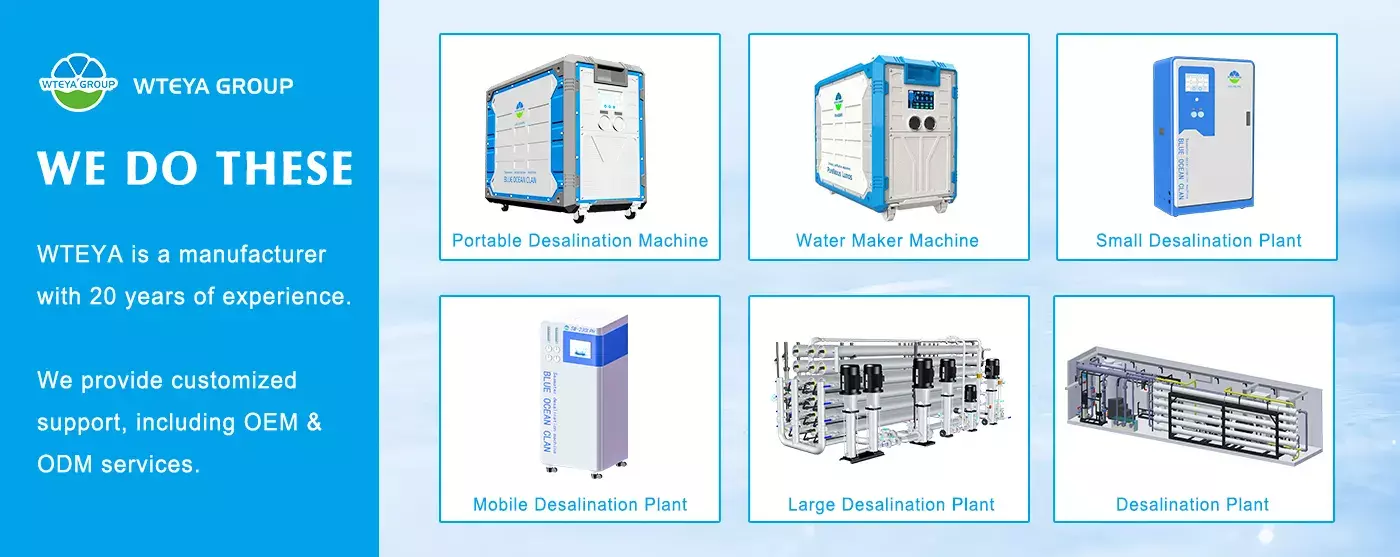
For semiconductor manufacturing facilities generating fluoride-containing wastewater, WTEYA provides customized treatment process design based on actual influent characteristics, wastewater volume, discharge standards, and water reuse requirements.
For projects involving high fluoride concentrations and complex wastewater compositions, an integrated treatment process may include:
Two-Stage Chemical Defluoridation → Advanced Fluoride Removal → Membrane Separation → MVR Evaporation Crystallization
In this configuration, lime precipitation and coagulation reduce the majority of the fluoride load. Advanced treatment further controls residual fluoride, membrane separation recovers reusable water, and MVR evaporation crystallization processes the resulting high-concentration stream for further volume reduction and crystallization.
It is important to note that chemical dosage, reaction pH, membrane recovery rate, and MVR operating parameters must be determined according to actual wastewater characteristics and project requirements. Standardized operating values should not be applied without appropriate water analysis and process evaluation.
For semiconductor manufacturers, an effective wastewater treatment solution is not simply one that meets discharge requirements during a single test. It must also maintain stable operation when production loads and wastewater characteristics fluctuate.
From high-concentration fluoride removal to advanced treatment, water recovery, and concentrate reduction, properly coordinating every stage is essential to developing a stable and economically viable semiconductor fluoride wastewater treatment system.
Why Partner with WTEYA?
• Nearly 20 years of industry experience
• Trusted by global leaders including Foxconn, Huawei, Ganfeng Lithium, Ronbay Technology
• 100+ success cases worldwide
• OEM & ODM customization available
Become a WTEYA Distributor!
We are expanding global partnerships:
• Preferential policies
• Professional training
• Full technical support
Let us help you achieve exceptional water quality and operational sustainability!
📲 WhatsApp: +86-1800 2840 855
📧 Email: info@wteya.com
🌐 Website: www.wteya.com
Previous: How Can PCB Wastewater Treatment Consistently Meet Discharge Standards?
Next: No More