






What Are the Effective Treatment Methods for High-Salt Wastewater Concentrate?
High-salt wastewater treatment is a critical part of industrial wastewater zero liquid discharge (ZLD) systems. The high-salt concentrate generated after membrane concentration is often the most difficult stream to handle in the entire treatment process. This article examines the sources and characteristics of high-salt concentrate, reviews the major treatment technologies, analyzes their application limits and economics, and introduces a systematic solution that has been validated through engineering practice.
1. High-Salt Concentrate: An Inevitable Byproduct of Membrane Systems
A typical industrial wastewater zero liquid discharge process follows the sequence of pretreatment → membrane concentration → evaporation and crystallization. Pretreatment removes suspended solids, hardness ions, and part of the organic matter to create suitable operating conditions for the membrane system. Membrane concentration then reduces the wastewater volume to approximately one-fifth to one-tenth of the original volume. The recovered permeate can be reused in production, while most of the salts and pollutants are retained in the membrane concentrate. Evaporation and crystallization provide the final separation of water and dissolved solids.
For example, in a ZLD system treating around 100 tons of wastewater per day, membrane concentration can recover a significant portion of the water for reuse, while the remaining concentrate must undergo further treatment through an evaporation and crystallization system. Although the wastewater volume has been greatly reduced, this concentrate contains most of the salts and organic pollutants originally present in the feedwater. TDS can reach 10–20%, while COD may range from several thousand to tens of thousands of milligrams per liter. As a result, high-salt concentrate is typically the most energy-intensive and technically demanding stream in the entire ZLD process.
2. Four Major Challenges in High-Salt Concentrate Treatment
Challenge 1: Extremely high salinity can cause scaling and unstable evaporator operation
The high salt concentration of the concentrate creates several problems inside an evaporator. The boiling point of the solution increases significantly, reducing the effective temperature difference available for heat transfer. At the same time, salts can rapidly precipitate on heat-transfer surfaces, causing scaling and a sharp decline in the heat-transfer coefficient. Frequent shutdowns for chemical or mechanical cleaning may then be required. Without a suitable evaporator design, stable long-term operation under these conditions can be difficult.
Challenge 2: High organic content can interfere with the evaporation process
During membrane concentration, dissolved organic matter is retained on the concentrate side and can reach concentrations of tens of thousands of milligrams per liter. Under elevated temperatures, these organic compounds may cause significant foaming. In mild cases, foaming can lead to entrainment and deterioration of condensate quality. Under more severe conditions, organic matter can deposit or coke on heat-transfer surfaces, creating difficult-to-remove fouling layers and further reducing heat-transfer efficiency.
Challenge 3: Corrosion under high-salt and high-COD conditions
High chloride concentrations combined with elevated temperatures and acidic or alkaline conditions can create a highly corrosive environment. Conventional stainless steel may experience pitting corrosion or stress corrosion cracking under unsuitable operating conditions. Critical components such as heat-transfer tubes, evaporator shells, pipelines, and valves may therefore require corrosion-resistant materials such as titanium, Hastelloy, or duplex stainless steel, which can significantly increase equipment costs.
Challenge 4: Compliance and disposal of crystallized salts
The final destination of the crystallized salts is essential to achieving a complete ZLD system. If the resulting salts are classified as hazardous waste, disposal costs can become extremely high and significantly increase operating expenses. In actual projects, it is not uncommon for the evaporator to successfully produce reusable water while the crystallized salts accumulate because no qualified disposal or receiving facility is available. In such cases, the ZLD system cannot be considered a truly closed-loop solution.
3. Comparison of Major Treatment Technologies
Multiple-effect evaporation: Multiple evaporators are connected in series to reuse the thermal energy of secondary steam at different stages. Steam consumption can be around 0.5 tons of steam per ton of water evaporated under typical conditions. This technology is suitable for facilities with access to low-cost waste heat or steam, but its operating cost can become high when an inexpensive external steam source is unavailable.
Mechanical vapor recompression (MVR): MVR compresses secondary vapor to increase its temperature and pressure, allowing it to be reused as the heating source. Electricity replaces most of the external steam demand. MVR is suitable for many high-salt concentrate treatment applications. Although its initial capital investment is generally higher, its energy consumption can be significantly lower than that of conventional multiple-effect evaporation. Advanced oxidation combined with biological treatment: Advanced oxidation can be used to break down organic pollutants before biological treatment. This approach can be suitable for wastewater with extremely high COD but relatively moderate salinity. However, oxidation efficiency can decline under high-salinity conditions, while biological microorganisms may be inhibited by high salt concentrations. Therefore, its application range for highly saline concentrate is relatively limited.
Electrodialysis: Electrodialysis uses ion-exchange membranes and an electric field to selectively transport and concentrate dissolved ions. It can be used as a salt pre-concentration technology, but it is sensitive to organic matter and membrane fouling. It generally cannot serve as the final treatment technology for high-salt concentrate.
Incineration: Incineration uses high temperatures to destroy organic pollutants and convert the wastewater into a concentrated solid residue. Due to its high capital investment and operating costs, it is generally reserved for special waste streams with extremely high organic content.
Overall, MVR evaporation and crystallization is one of the most established final treatment options for high-salt concentrate when the objective is to achieve effective separation of water and dissolved salts with controllable energy consumption. Its large-scale engineering application also provides substantial operational experience for industrial ZLD projects.
4. MVR Evaporation and Crystallization: Working Principle and Energy Advantages
The core principle of MVR technology is the recycling of secondary steam. As the concentrate boils inside the evaporator, secondary vapor is generated. This vapor is compressed by a mechanical vapor compressor, increasing its temperature and pressure before it is returned to the heating side of the evaporator. The compressed vapor releases latent heat through condensation, producing high-quality condensate while the recovered heat is reused for continuous evaporation.
This energy-recovery mechanism allows MVR systems to significantly reduce their dependence on external fresh steam. Instead of continuously supplying large quantities of steam, the system primarily uses electricity to drive the vapor compressor and recycle thermal energy.
Under typical operating conditions, the difference can be substantial:
• Multiple-effect evaporation: May consume several tons of steam per hour, with operating costs strongly affected by the local steam price.
• MVR evaporation: Typically consumes electricity in the range of tens of kilowatt-hours per hour for certain applications, with operating costs potentially much lower than conventional multiple-effect evaporation.
The economic advantage of MVR can become more significant as treatment capacity increases, making it particularly attractive for large-scale high-salt concentrate treatment projects.
5. WTEYA's Systematic High-Salt Concentrate Treatment Solution
To address the four major challenges described above, WTEYA develops an integrated treatment process:
High-salt concentrate → Pretreatment and softening → MVR evaporation and concentration → Crystallization and separation → Crystallized salt recovery
Pretreatment: Preparing the Concentrate for Evaporation
The purpose of pretreatment is to adjust the concentrate to an operating condition suitable for the evaporation system. Depending on the wastewater characteristics, the treatment process may include:
• Chemical softening: Chemicals are added to remove calcium and magnesium hardness and control hardness within a suitable range, reducing the risk of scale formation on heat-transfer surfaces.
• pH adjustment: The pH is adjusted to an appropriate operating range to help control corrosion and maintain stable evaporation conditions.
• Tubular microfiltration: Fine particles generated during chemical precipitation are removed to protect downstream equipment and maintain stable water quality.
• Advanced oxidation: For selected high-COD concentrates, advanced oxidation can be introduced to reduce the organic load and minimize foaming during evaporation.
MVR Evaporator: Designed for High-Salinity Applications
WTEYA's MVR evaporation systems are optimized for high-salt and high-COD concentrate treatment. Depending on the specific water chemistry, the system can incorporate the following design features:
- Corrosion-resistant materials: Titanium, Hastelloy, or duplex stainless steel can be selected according to water-quality analysis and corrosion requirements.
- Forced circulation: High circulation velocity inside the heat-transfer tubes helps reduce salt deposition and crystallization on tube surfaces.
- Intelligent control: A PLC-based control system integrates multiple online monitoring parameters and automatically adjusts operating conditions according to concentrate characteristics.
- Foam control: Mechanical and chemical defoaming measures can be combined to reduce the risk of foaming, entrainment, and condensate contamination.
Crystallized Salt Recovery: Turning a Disposal Cost into a Potential Resource
Salt composition varies significantly between industries and wastewater sources. WTEYA can design different separation and crystallization processes according to the specific water chemistry. For concentrates dominated by sodium chloride (NaCl), an MVR forced-circulation crystallizer can be used to produce relatively high-purity sodium chloride crystals. For mixed sodium chloride and sodium sulfate (NaCl/Na₂SO₄) systems, nanofiltration can be introduced upstream for salt separation. Monovalent and divalent ions are separated before undergoing their respective crystallization processes, improving the potential quality and usability of the recovered salts. When a suitable salt recovery and utilization route is established, crystallized salts may be recovered as industrial materials rather than simply treated as waste, helping reduce disposal costs and improve the overall economics of a ZLD system.
6. WTEYA — A Professional Partner for High-Salt Wastewater Zero Liquid Discharge
WTEYA has more than a decade of experience in industrial wastewater treatment, with a focus on high-salt wastewater zero liquid discharge, MVR evaporation and crystallization, and comprehensive industrial wastewater treatment.
Core capabilities include:
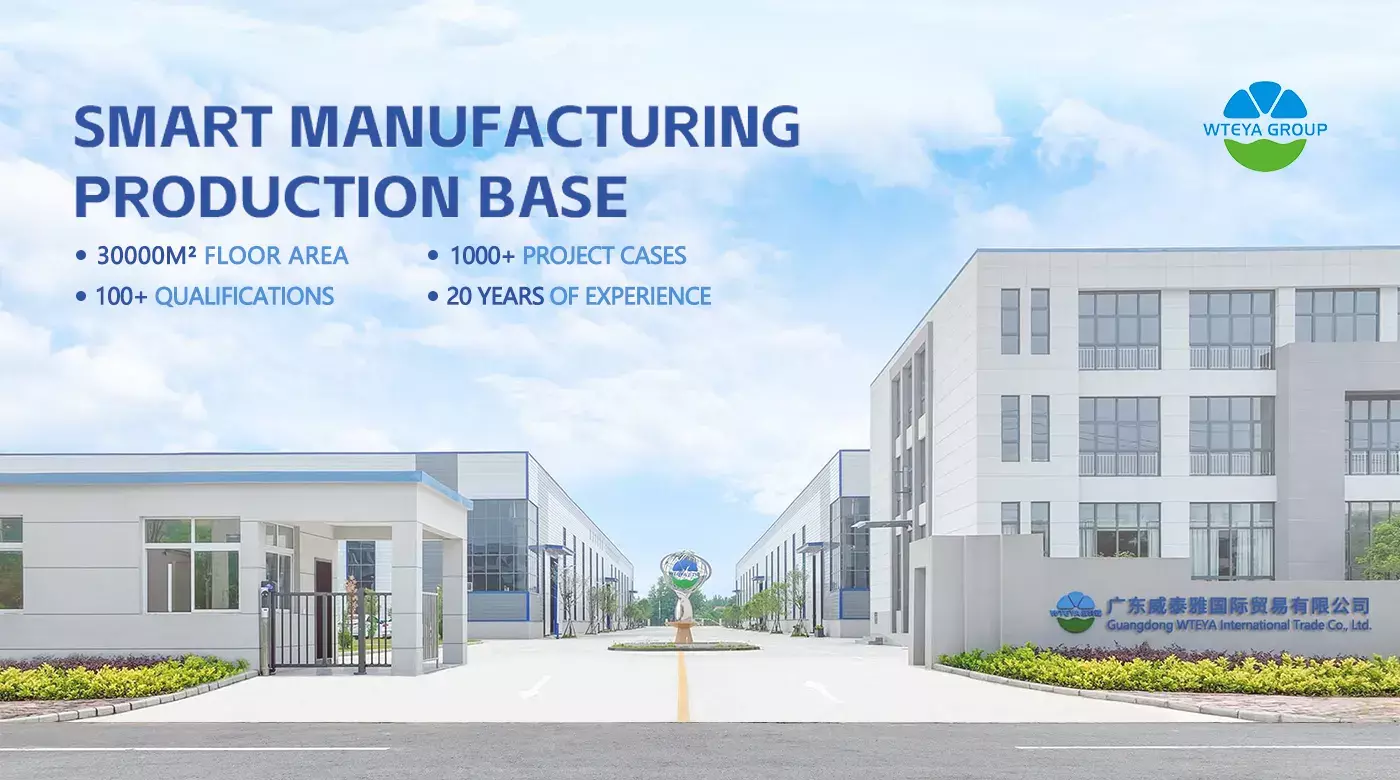
• Equipment manufacturing: WTEYA operates modern manufacturing facilities in multiple locations and has in-house capabilities for MVR evaporation systems and supporting pretreatment equipment.
• Engineering capabilities: The company holds professional contracting qualifications for building electromechanical installation and has obtained multiple industry honors and patents.
• Integrated services: WTEYA provides end-to-end services covering water-quality analysis, process design, equipment manufacturing, installation, commissioning, and long-term operation and maintenance.
• Technical and service teams: Experienced R&D, engineering, operation, and after-sales teams support project implementation and ongoing system performance.
WTEYA has provided high-salt wastewater treatment solutions for industries including chemical manufacturing, pharmaceuticals, optoelectronics, and coal chemical processing, covering processes from membrane concentration to evaporation and crystallization. These projects have provided practical engineering and operation experience for complex high-salinity wastewater applications.
Conclusion:
The treatment of high-salt wastewater concentrate represents the last mile of industrial zero liquid discharge and is often one of the most technically demanding stages of the entire process. Excessive salinity can cause scaling, high organic loads can lead to foaming and entrainment, highly corrosive conditions can affect equipment service life, and crystallized salts may create significant compliance and disposal challenges. These issues are closely interconnected, and weaknesses in any one area can affect the long-term stability of the entire system.
MVR evaporation and crystallization has become an established technology for the final treatment of high-salt concentrate in many industrial ZLD applications. Its value lies not only in separating water from dissolved salts with controllable energy consumption, but also in creating opportunities for salt separation, purification, and recovery. With an appropriate downstream utilization route, materials that would otherwise require costly disposal may be recovered as industrial resources, helping transform ZLD from a pure environmental cost into part of a more circular wastewater management strategy.
WTEYA provides integrated services from water-quality analysis and process design to equipment manufacturing and project commissioning. Contact WTEYA to discuss a customized high-salt wastewater treatment and MVR evaporation solution for your project.
Why Partner with WTEYA?
• Nearly 20 years of industry experience
• Trusted by global leaders including Foxconn, Huawei, Ganfeng Lithium, Ronbay Technology
• 100+ success cases worldwide
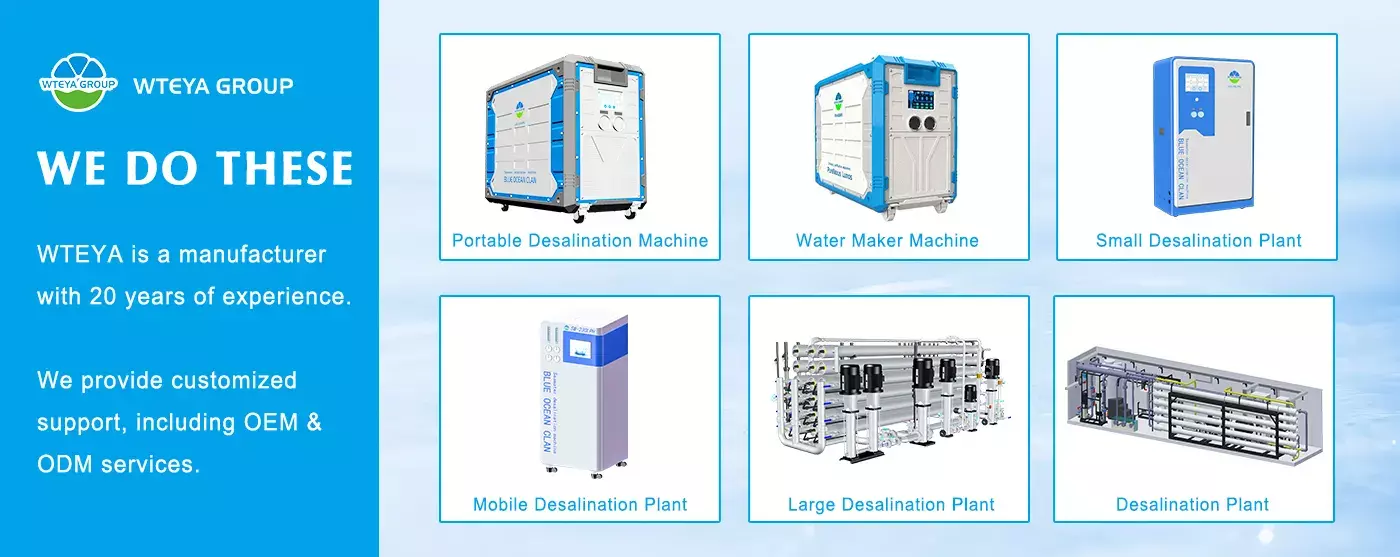
• OEM & ODM customization available
Become a WTEYA Distributor!
We are expanding global partnerships:
• Preferential policies
• Professional training
• Full technical support
Let us help you achieve exceptional water quality and operational sustainability!
📲 WhatsApp: +86-1800 2840 855
📧 Email: info@wteya.com
🌐 Website: www.wteya.com